
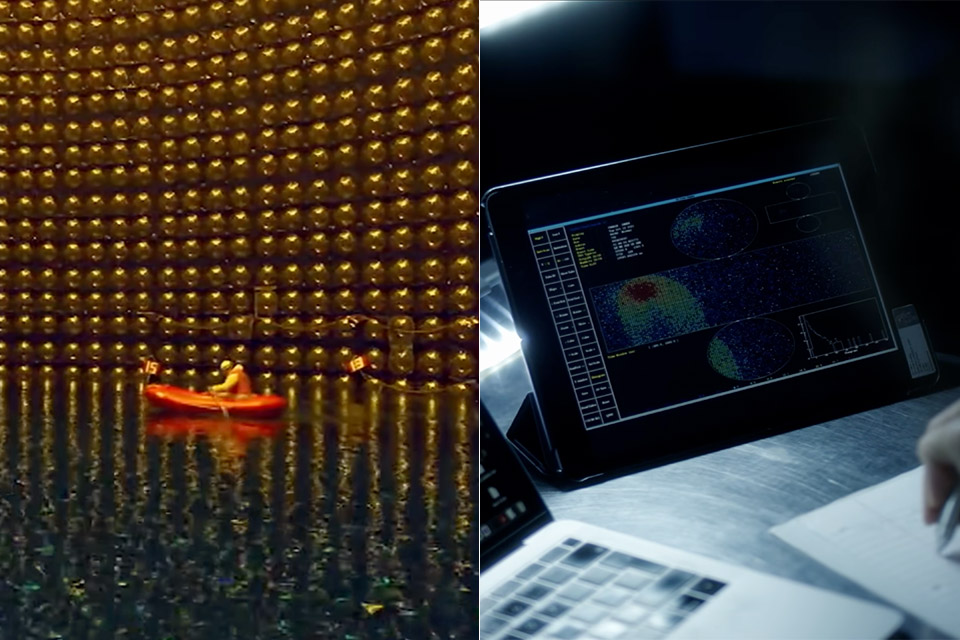
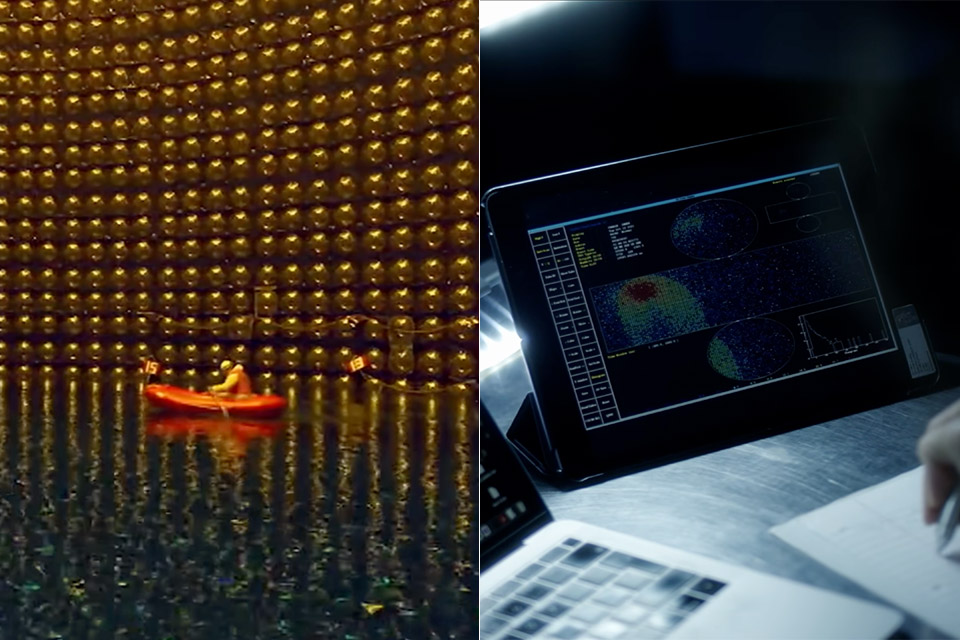
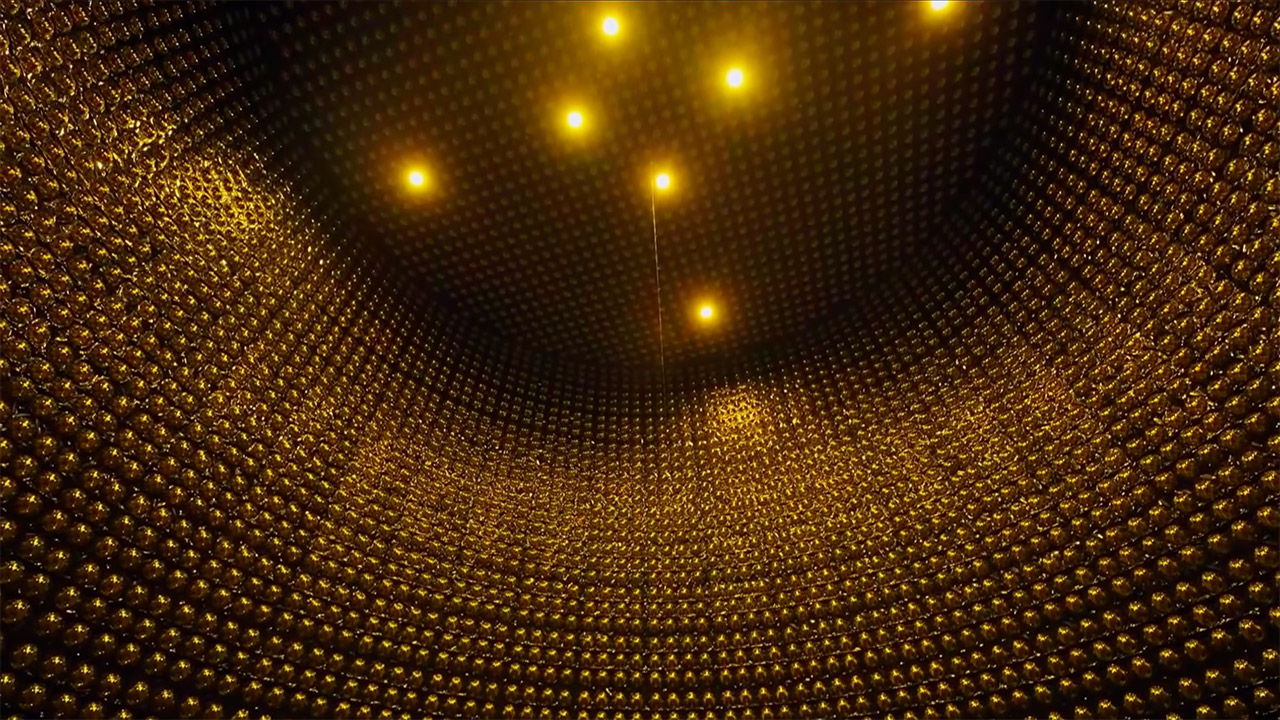
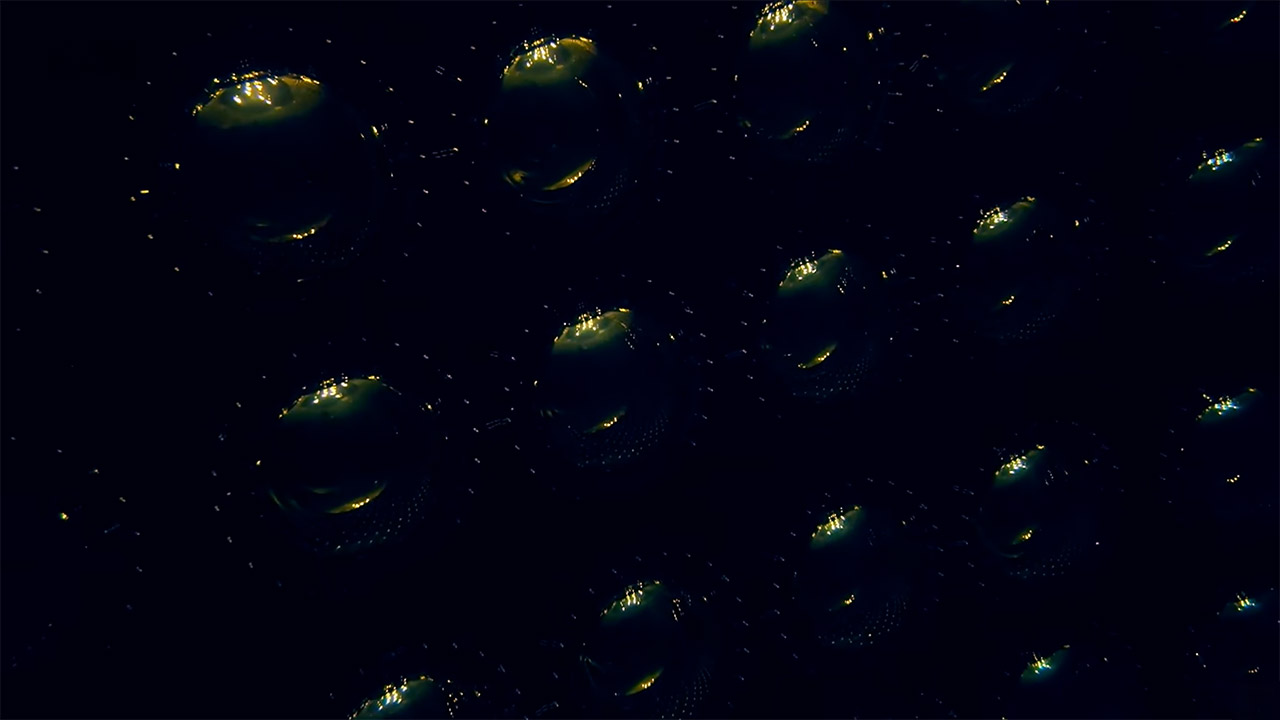
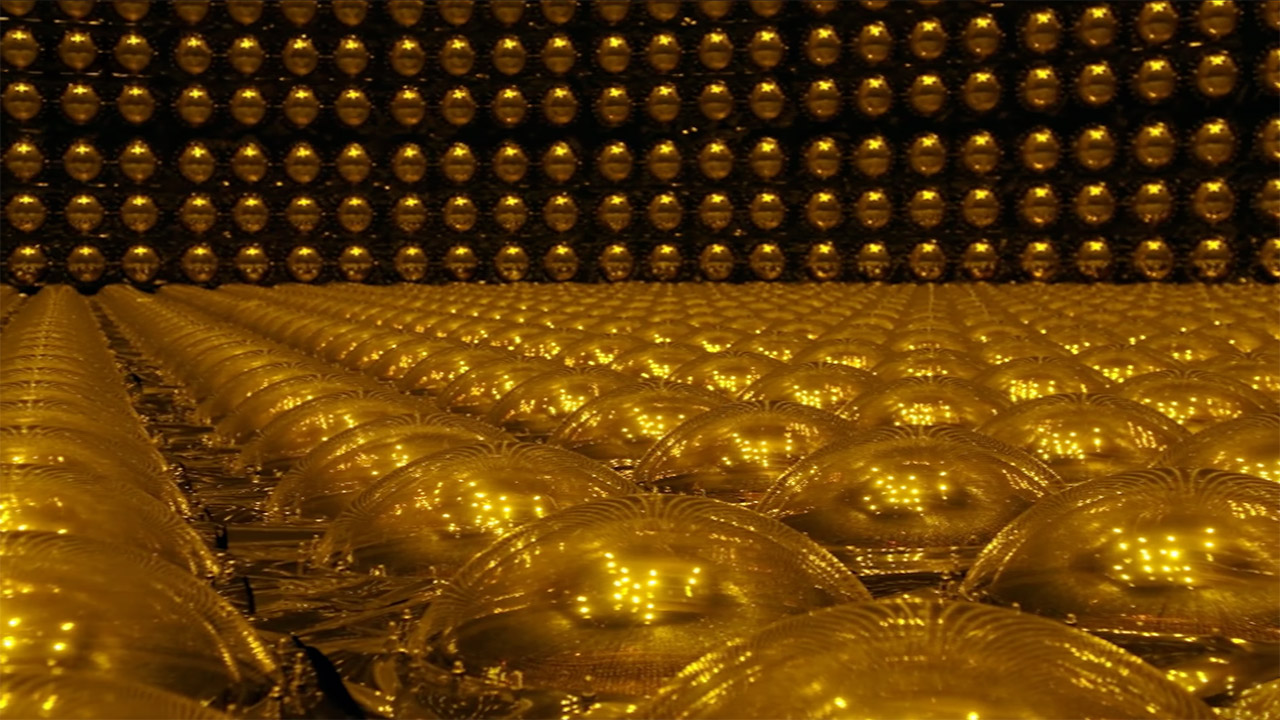
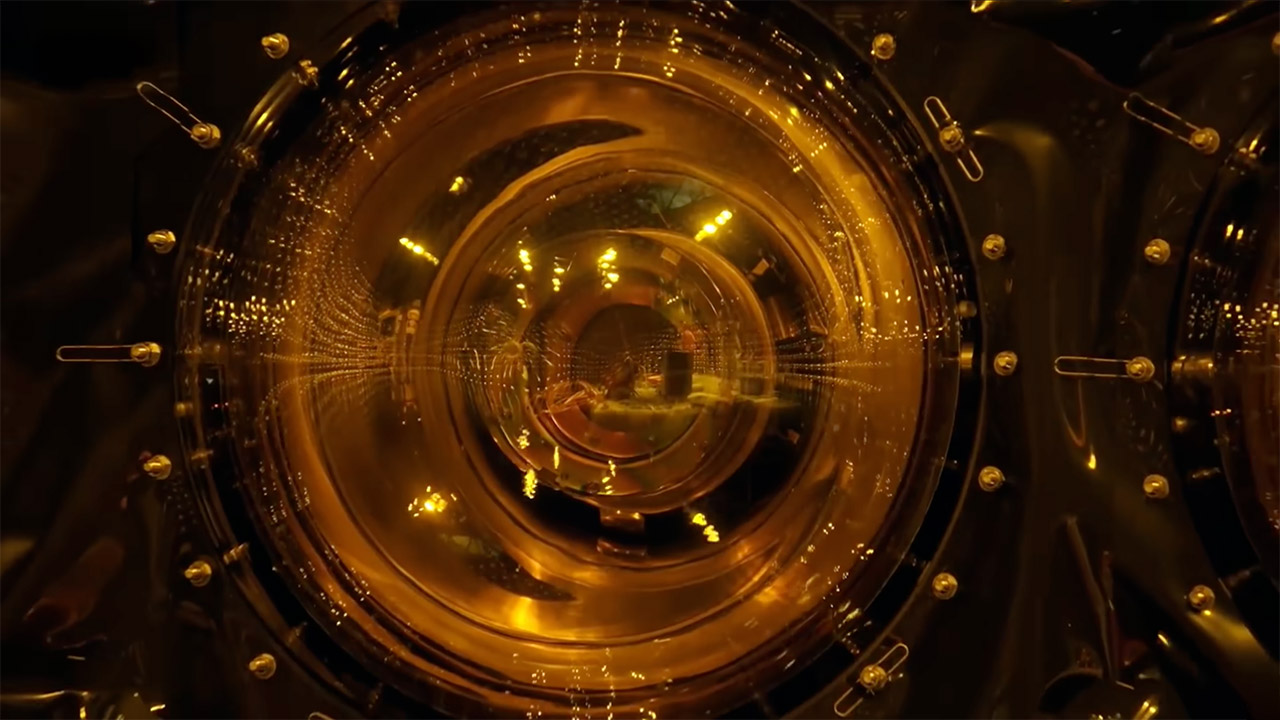
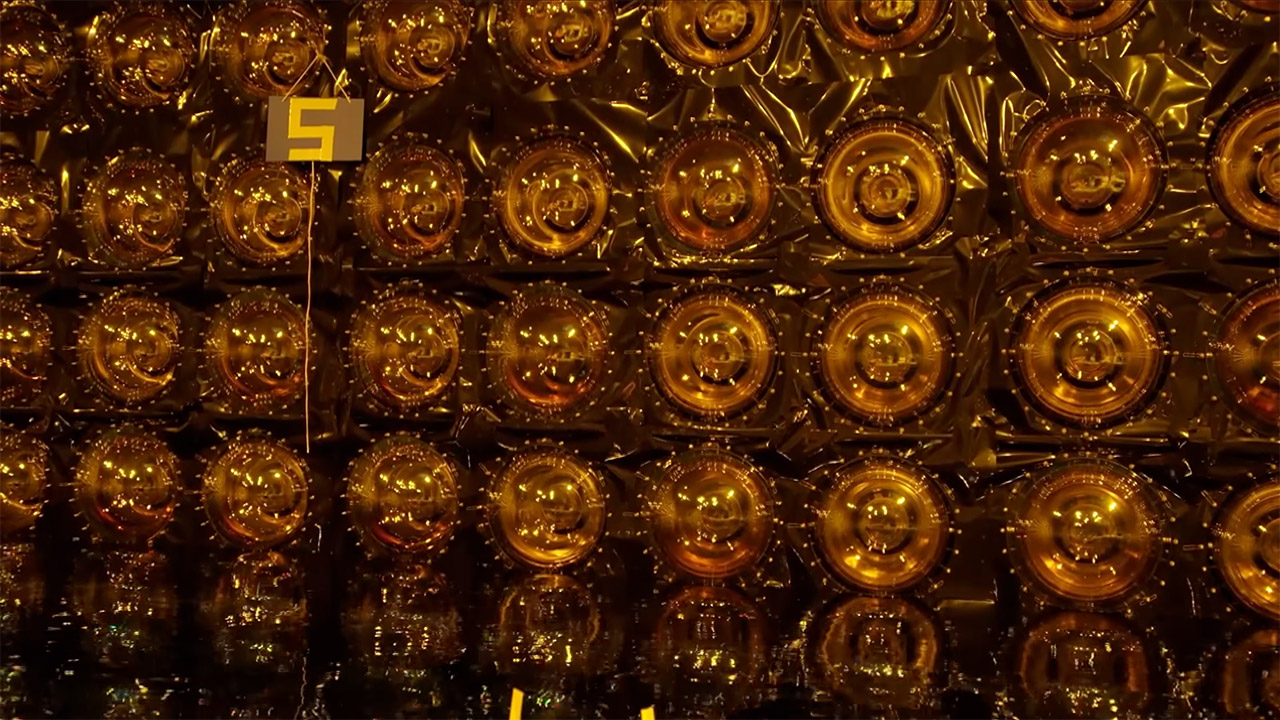
Buried a full kilometer beneath Mount Ikenoyama in central Japan, a stainless steel cylinder roughly forty meters across and just as tall holds fifty thousand tonnes of water so pure it can slowly dissolve metal. Walls, floor, and ceiling carry more than eleven thousand photomultiplier tubes the size of large beach balls. When sodium lamps light the drained tank for rare maintenance, those tubes turn into a field of golden spheres that bend a visitor’s sense of distance and scale.
A person lowered on a small platform feels the eyes of thousands of sensors staring back from every direction, and the geometry makes the space seem larger than its already enormous measurements. When BBC crews went in to shoot during one of those openings, they found themselves in a room that appears to be right out of a sci-fi film, but it’s all very quiet and tranquil. Neutrinos continue to rush in from all directions. The great majority of them simply zip across the water without anyone noticing.

LEGO Art Japanese Cherry Blossom Landscape 31218 | Building Sets for Adults, Ages 18+, Hangable Frame or…
- MODEL KIT FOR ADULTS – Build your own 3D wall art with the detailed and colorful Japanese Cherry Blossom Landscape (31218) building set for adults
- HOMAGE TO JAPAN – This LEGO reimagination of a traditional Japanese landscape features Mount Fuji, a teahouse, Japanese cranes and ‘Sango-Kaku…
- BUILD WALL ART IN 3D – Construct a detailed landscape featuring an adjustable waterfall that flows beyond the frame to pour directly out on a wall…
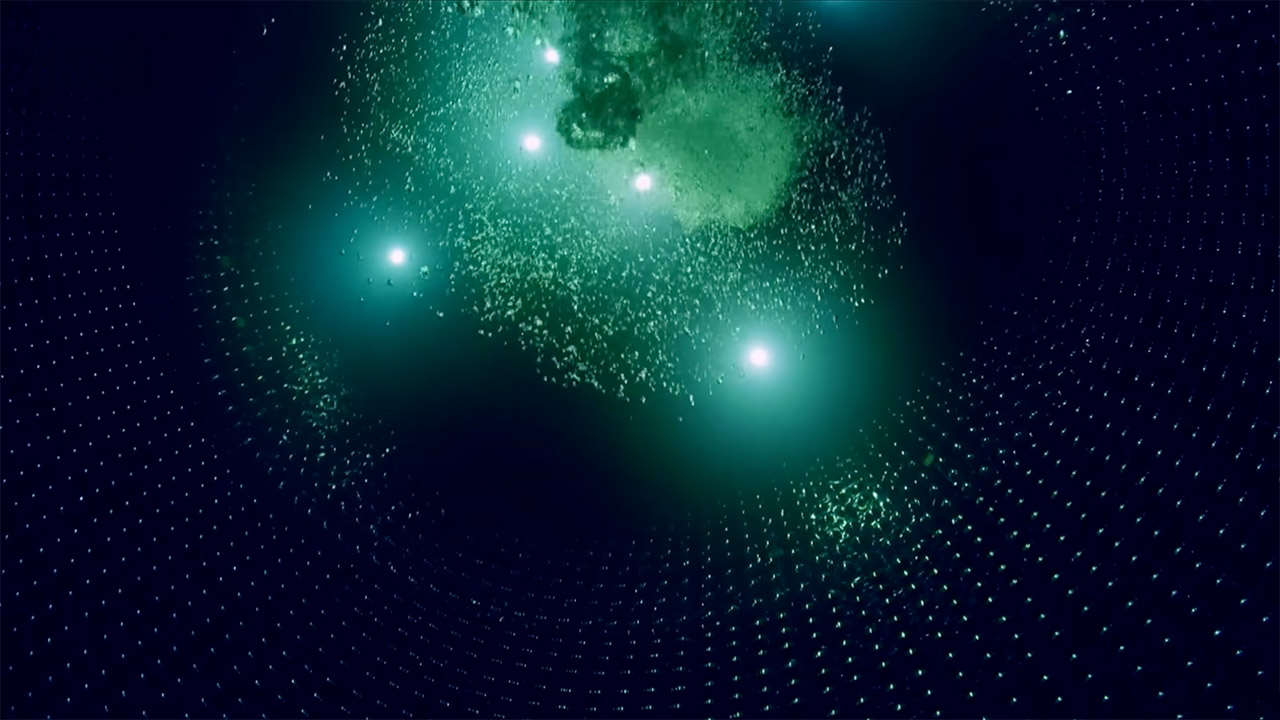
Every now and then, one of them collides with a water molecule and emits a small flash of Cherenkov light. The photomultiplier tubes detect the flash, record its time and brightness, and then transmit that information to the computers above ground. If put on the moon, the tubes are so sensitive that they might detect a match being lit on Earth. The researchers must keep the water flowing through filters at dozens of tons per hour so that it remains pure enough to not drown out the uncommon signals within the background noise. When the tank sits full, people stay out because the purity that protects the measurement also makes the water aggressive toward ordinary materials.
Scientists use the detector to study neutrinos that come from the sun, are formed in cosmic ray showers high in the atmosphere, or are even produced in controlled beams fired from an accelerator located approximately 290 kilometers distant at the J-PARC facility. Back in the late 1990s, this instrument demonstrated that neutrinos change type as they travel and that they must have a little amount of mass.
That discovery even garnered the Nobel Prize. Later, they utilized the long baseline beam to compare neutrinos to their anti-matter counterparts. After years of data analysis, the researchers discovered a disparity in how the two types of particles oscillate. It’s not conclusive, but it does provide a strong suggestion as to why matter survived the early cosmos whereas antimatter did not.
In 2020, the collaboration began dissolving gadolinium sulfate into water. This metal absorbs neutrons released during particular interactions, resulting in a second, delayed flash. The twofold signal allows them to distinguish between true events and background noise. With this improvement in place, they were able to aggregate five thousand days of data. as all of the data from the good old days of clean water, along with the fresh data from the gadolinium years.
Fast forward to this June 2026, they eventually reported a 2.6 sigma excess in the energy range where they expected to observe neutrinos from all of the supernovae that have exploded throughout cosmic history. The signal is not quite at the five sigma threshold required for a legitimate discovery, but it is not your typical statistical blip either. People are calling it the first hint of the diffuse supernova neutrino background, which is a faint collection of particles from stars that went supernova a long time ago.
April 2026 marked thirty years after Super Kamiokande initially began operating at full capacity, and the cavern is still producing data on solar neutrinos, atmospheric events, and distant beams. They can now receive real-time notifications if a nearby supernova goes off, allowing other telescopes to change their focus to the same patch of sky within minutes. Nearby, excavation for Hyper Kamiokande has finished its main cavern. The successor detector will be larger still, and construction schedules point toward first data around twenty twenty eight. Until then the original tank continues its slow, continuous watch, turning occasional flashes of light into measurements that link the particles passing through Japan today with the explosions that shaped the elements around us.
Super Kamiokande Golden Water Tank Buried in Japan Seeks Answers to Cosmic Matter Mystery
#Super #Kamiokande #Golden #Water #Tank #Buried #Japan #Seeks #Answers #Cosmic #Matter #Mystery
