
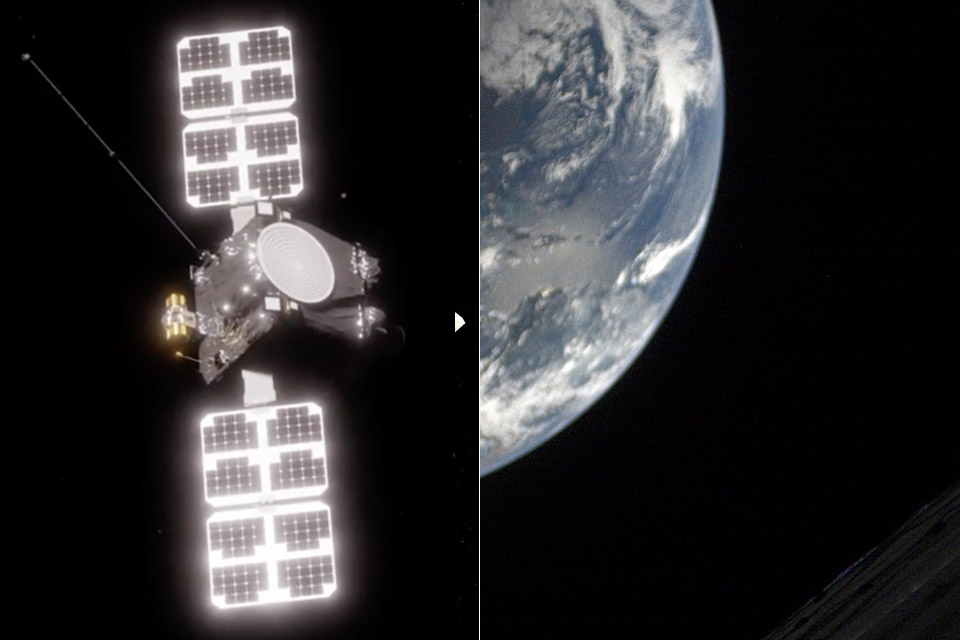
One of NASA’s twin ESCAPADE spacecraft turned its camera back toward home on November 9, 2026, and recorded a pair of images that show Earth from a distance few humans ever see. About three hours after its closest approach, the spacecraft known as Gold used its Visible and Infrared Observation System to capture the Western Hemisphere from roughly 38,500 miles away.
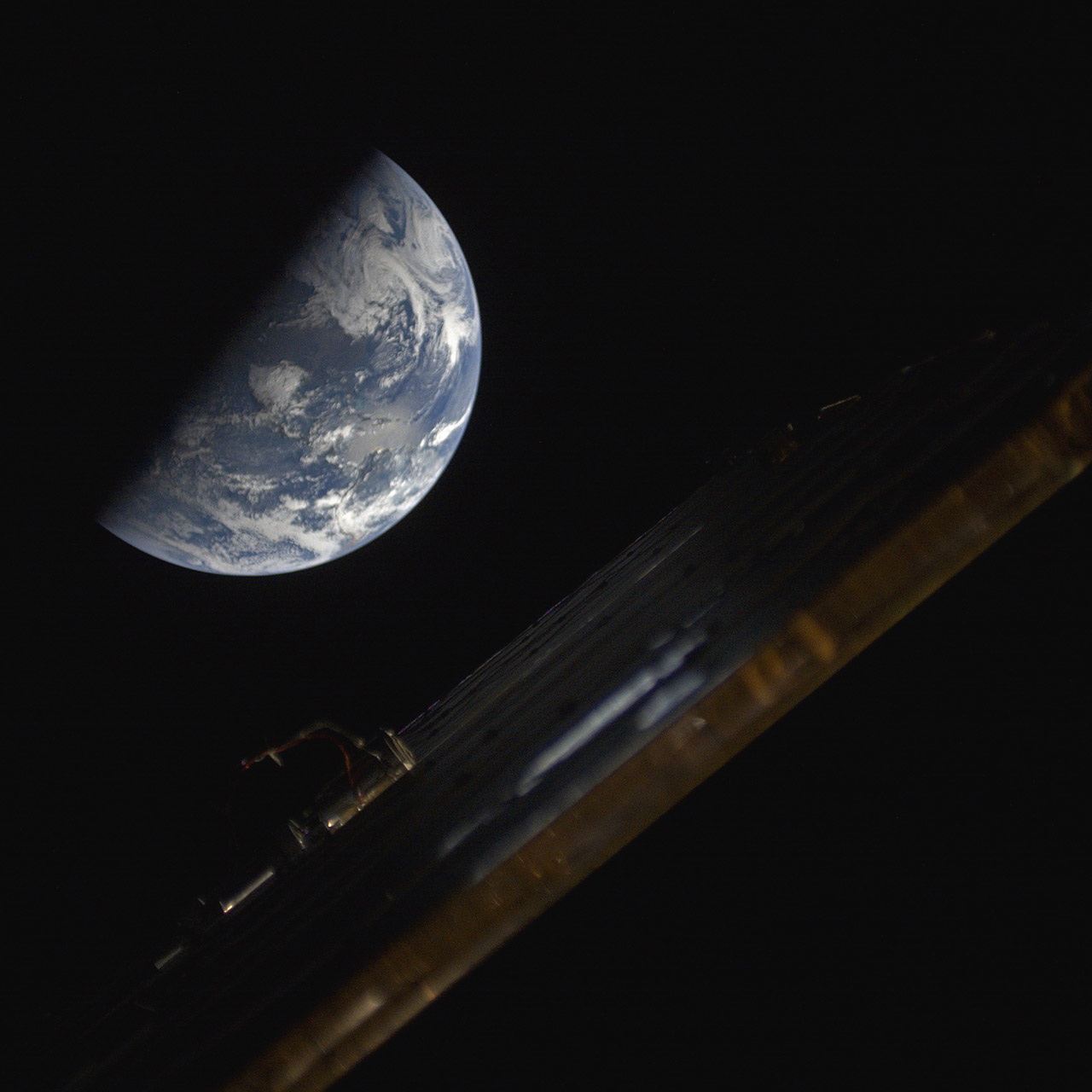
A solar panel takes up a significant portion of the front of both photos. In this image of Earth taken with just visible light, the world appears as a partially lighted sphere of whirling clouds and seas against an inky blackness. Meanwhile, the infrared image creates a very different picture, with temperature as the focal point, with warmer portions brighter and cooler areas much darker.

LEGO Icons Hubble Space Telescope 11382 | Building Sets for Adults, Ages 18+, Space Model Decor, Home…
- EXPLORE THE HUBBLE SPACE TELESCOPE – Celebrate one of humanity’s greatest scientific feats while enjoying a relaxing building experience with the…
- REPLICA SPACE MODEL – Recreate the legendary space-based telescope with posable solar arrays and antennas, an opening aperture door and a detailed…
- AUTHENTIC DETAILS – Remove the exterior panels to reveal a detailed instrument bay, which features gyroscopes alongside primary and secondary…
Gold and Blue are two refrigerator-sized spacecraft manufactured by Rocket Lab and launched together from Cape Canaveral on November 13th, 2025, aboard Blue Origin’s second New Glenn rocket. Because Earth and Mars were on different sides of the Sun, these twin vessels spent the next year cruising around the Earth-Sun Lagrange point 2, which is nearly a million miles away from Earth.
Since they were not bound by a traditional Mars mission timeline, they could stay and wait for a better alignment rather than simply waiting until the next window. Then, on November 7, Blue flew low over Earth and fired its engine for around 9 minutes. Just two days later, Gold took its own turn, plummeting from roughly 650 miles to release a burst of speed, putting them both on course for Mars, where they’ll arrive after a 10-month journey.
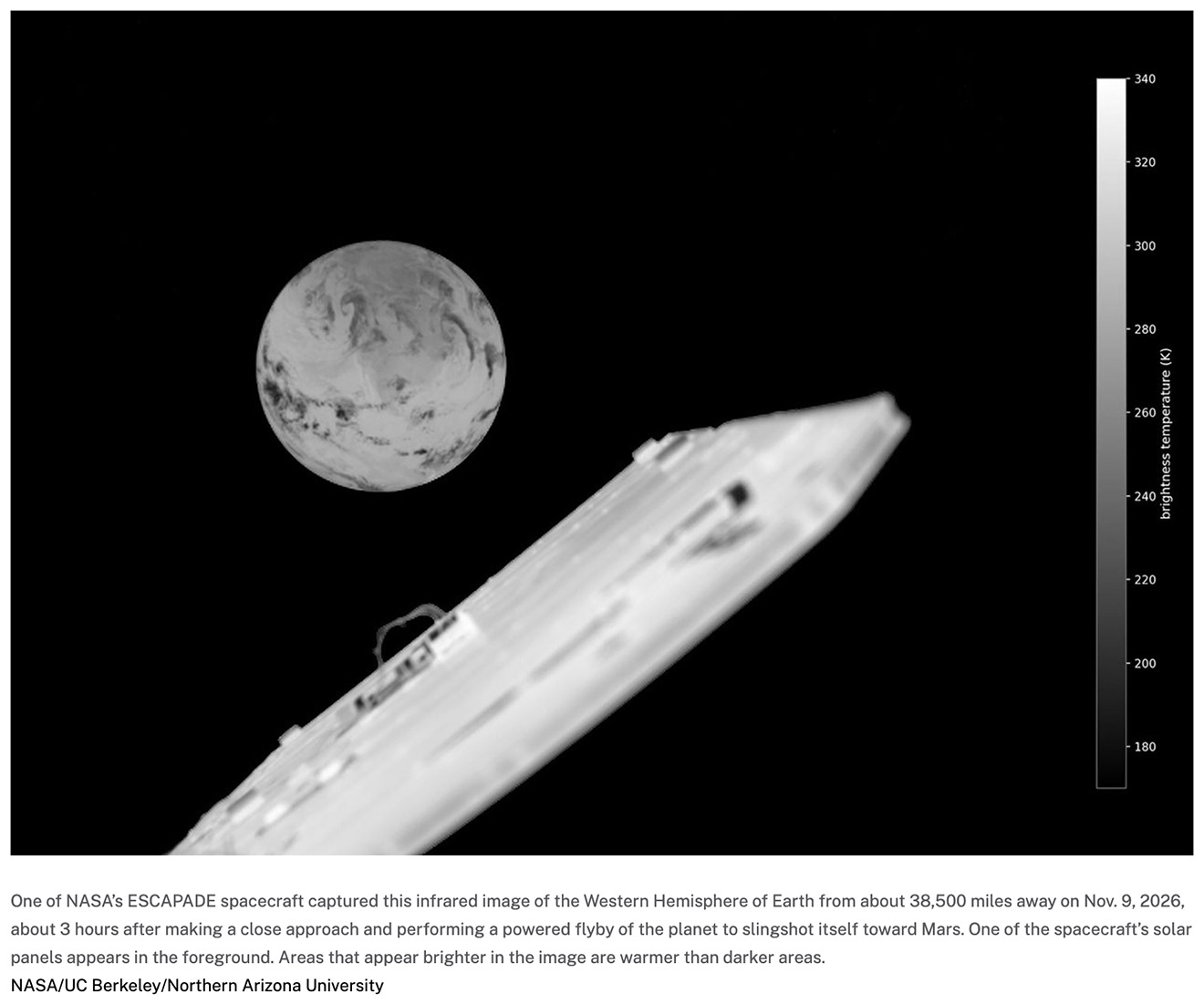
These powered flybys are a first for a NASA spacecraft, with the Earth serving as a slingshot to generate enough speed to reach Mars. The identical probes will then go on to provide a dual vision of Mars as it was intended, which is fundamental to the mission concept. Each has a magnetometer, an electrostatic analyzer, a Langmuir probe, and the same camera that recently captured a photo of the Earth.
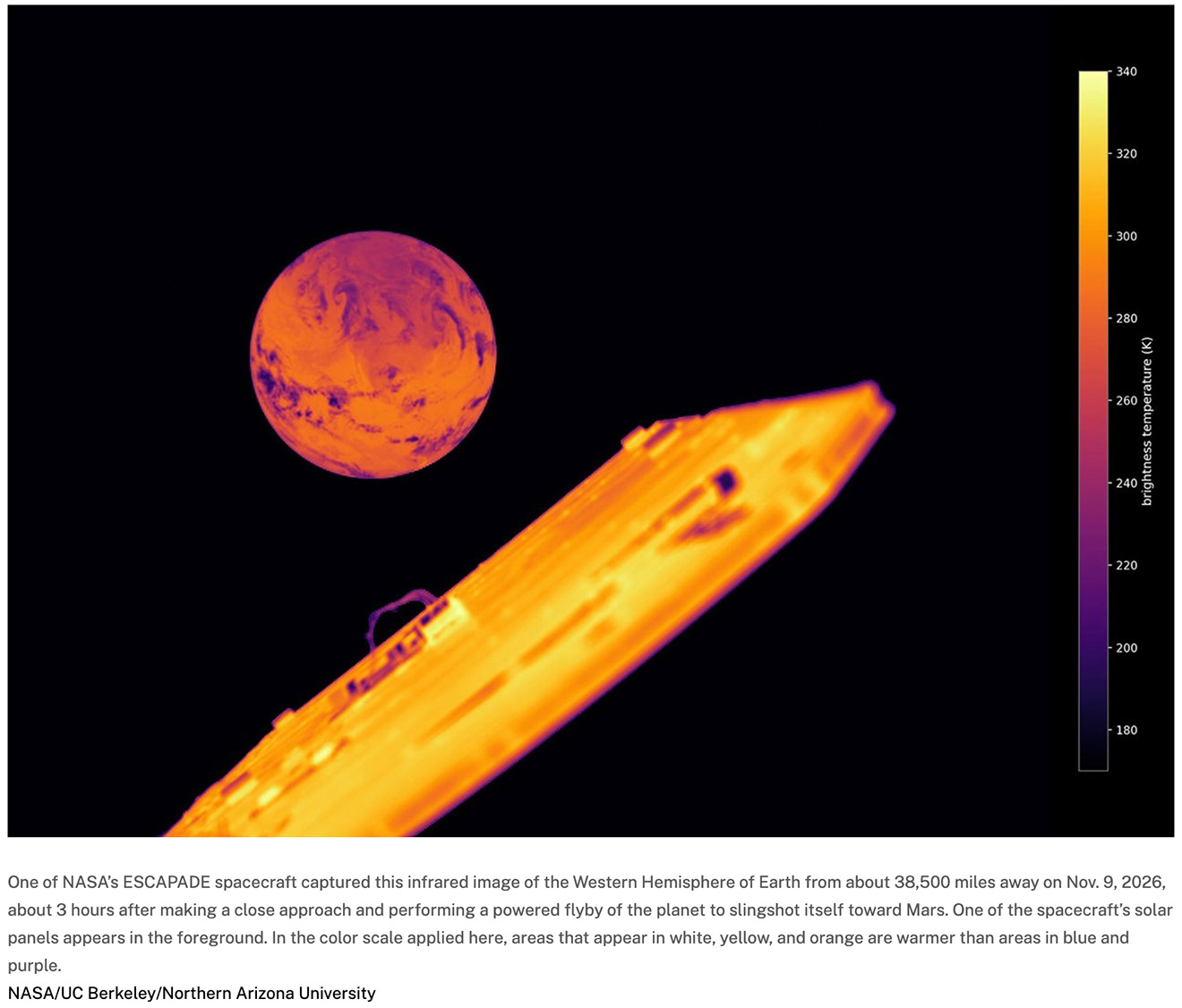
Together, they’ll be able to map out how the solar wind interacts with Mars’ hybrid magnetic field and begins to peel the top few layers of the atmosphere, giving us some insight into how Mars lost so much of its thick atmosphere in the first place. Meanwhile, the equipment can measure the solar wind in the empty region between the two planets.
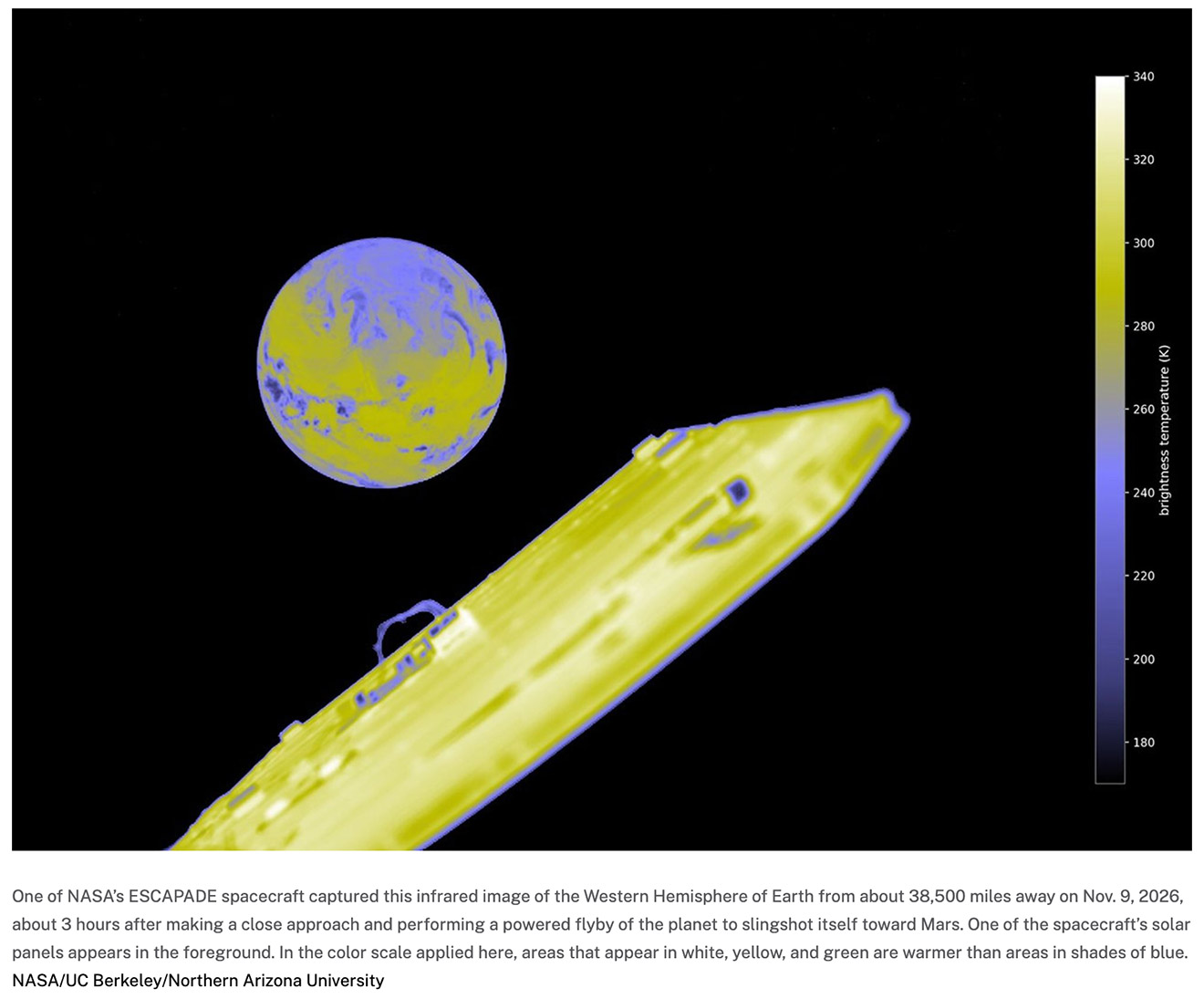
A commercial imaging satellite photographed the two spaceships as they flew by Earth, and an engineer at Rocket Lab in Los Angeles captured a shot of them streaking across the nite sky. The photographs Gold transmitted back a few hours later are likely the most intimate record we have of the moment they escaped Earth’s atmosphere. From 38, 500 miles away, Earth still appears massive and detailed, but it is framed by blackness, indicating how far they still have to go. In less than a year, the identical cameras will be turned on a different planet, and all of the data collected will help to fill in a missing chapter about Mars’s loss of atmosphere.
NASA’s ESCAPADE Twins Capture Moody Earth Farewell Images After Powered Flybys Toward Mars
#NASAs #ESCAPADE #Twins #Capture #Moody #Earth #Farewell #Images #Powered #Flybys #Mars
