
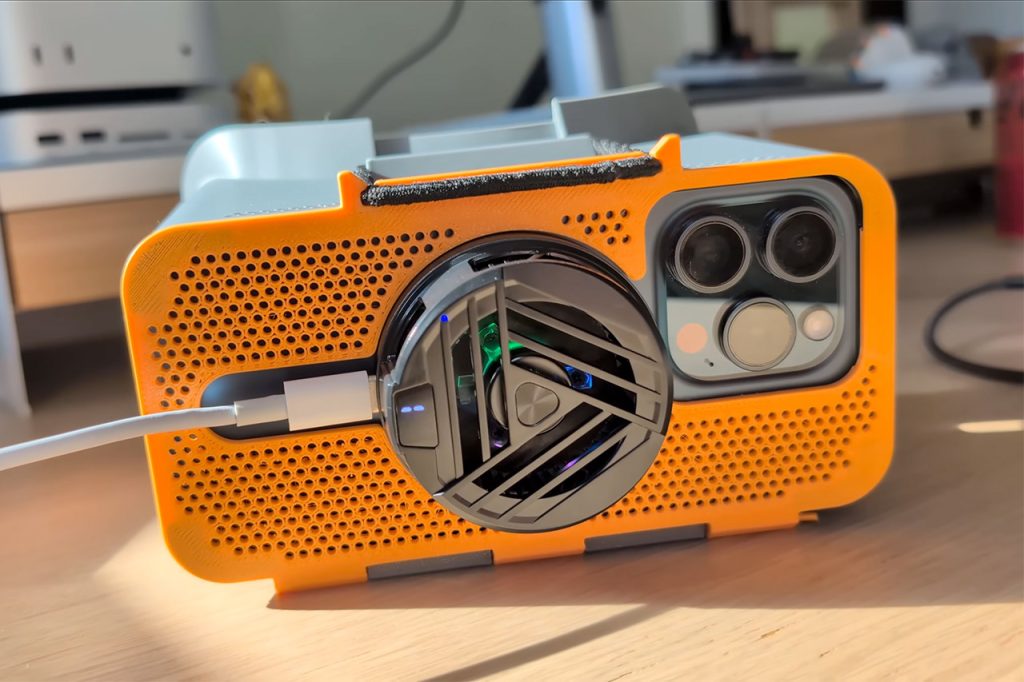
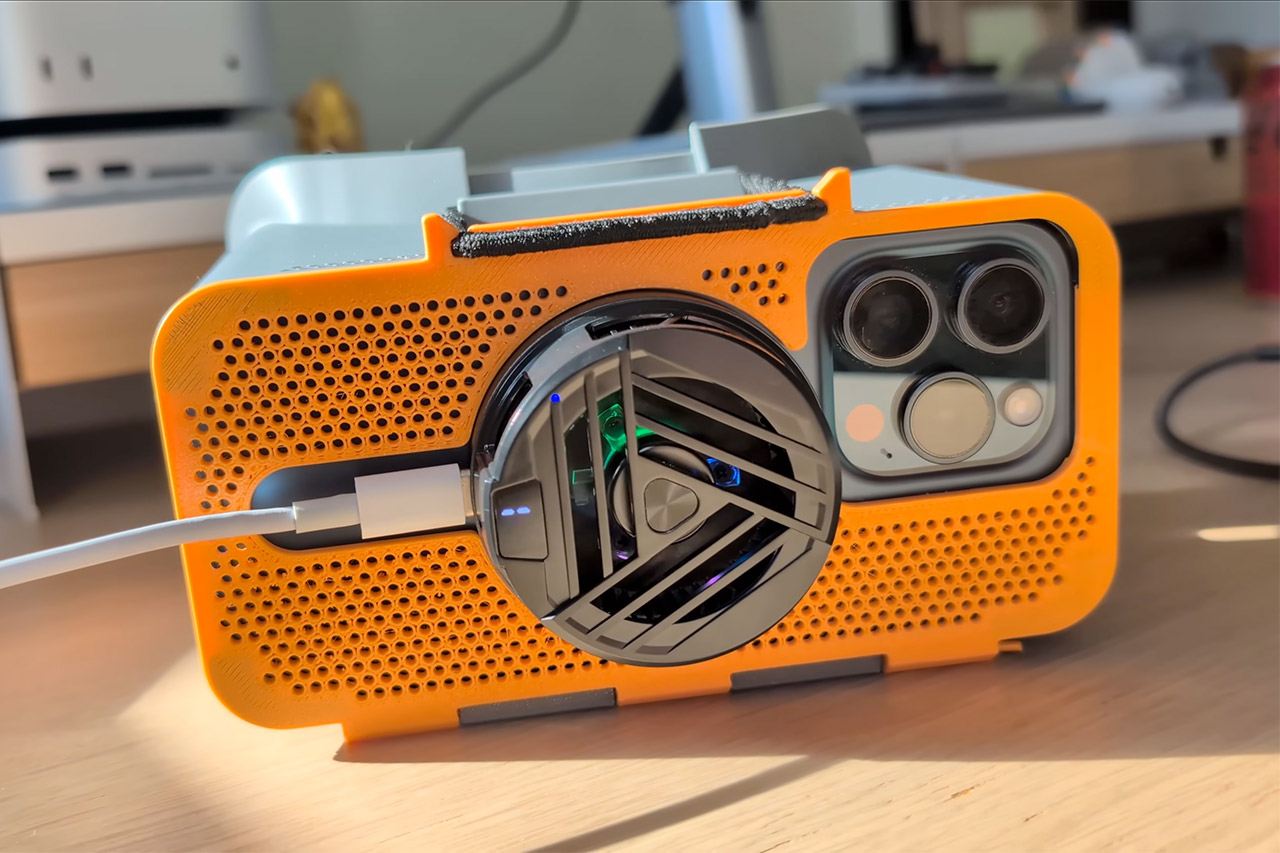
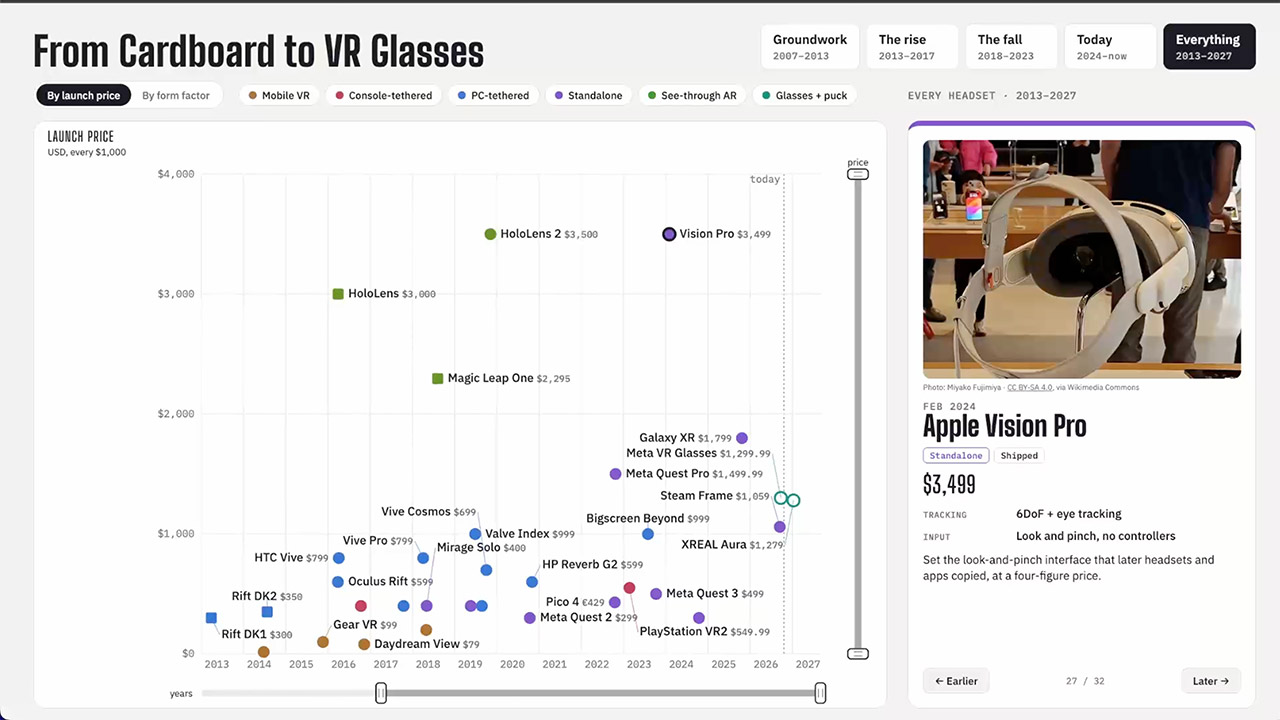
A brand new Apple Vision Pro still starts at $3,699 before taxes, and even a used unit rarely drops into easy reach for most people. Brenpoly decided that gap was wide enough to test something far simpler. He took a modern smartphone, a 3D printer, and a pair of old Google Cardboard lenses that still sell for about five dollars, then turned them into CardboardXR, a working mixed reality setup that delivers six degrees of freedom tracking, camera passthrough, surface detection, and hand gestures.
Years ago, Google Cardboard demonstrated that you could experience virtual reality with little more than a cardboard box and an old phone. Those early versions gave you only about 3 degrees of freedom and no sense of where you were in the room, but phone technology advanced, screens reached 120 hertz, high-end models began to include LiDAR scanners, and chips to handle machine learning were added to the phone itself. However, mobile VR went quiet right before any of these updates arrived. Brenpoly wondered if you could create a new version that works even better now that the phone is already equipped with the majority of what a headset needs.
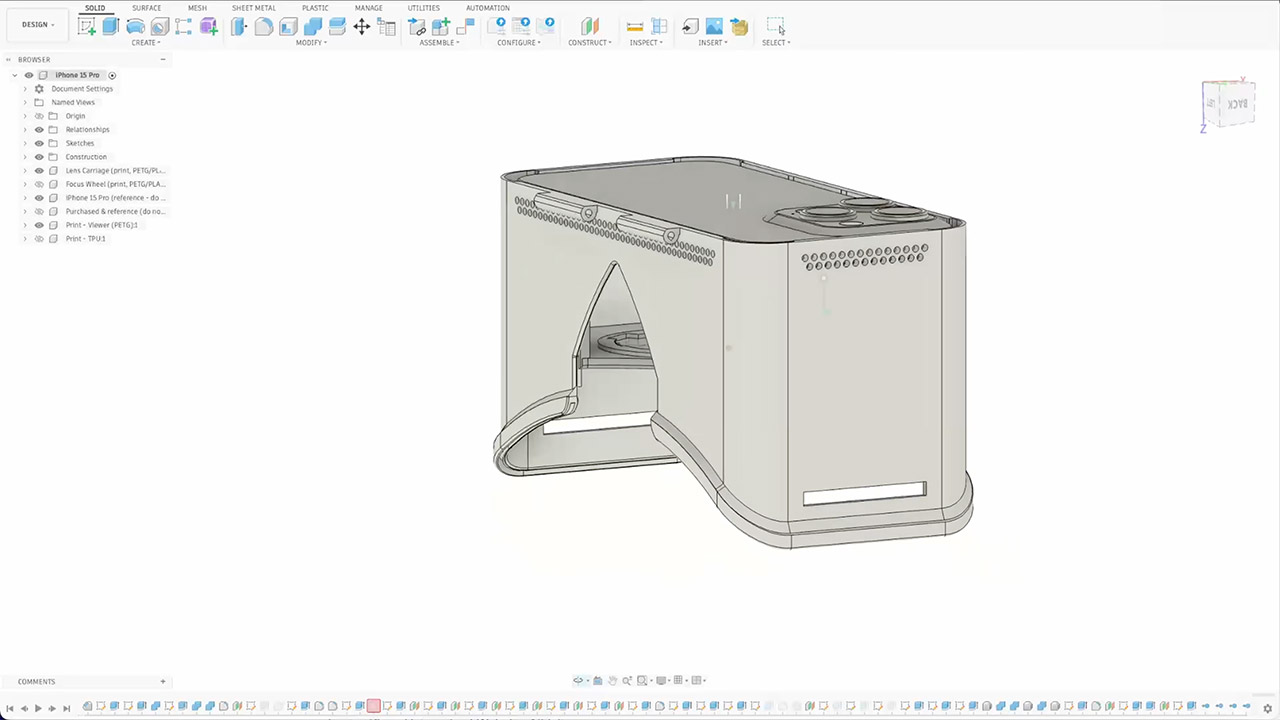
He basically took an iPhone’s measurements as a template in Autodesk Fusion and then had an AI tool handle some of the heavy lifting by connecting the program to its model context. The end result was a printed outer case that secures the phone behind a pair of 45mm concave Cardboard v2 lenses. This also features a sliding bit with a simple knob that allows you to adjust the focus for folks with varied vision or specs.
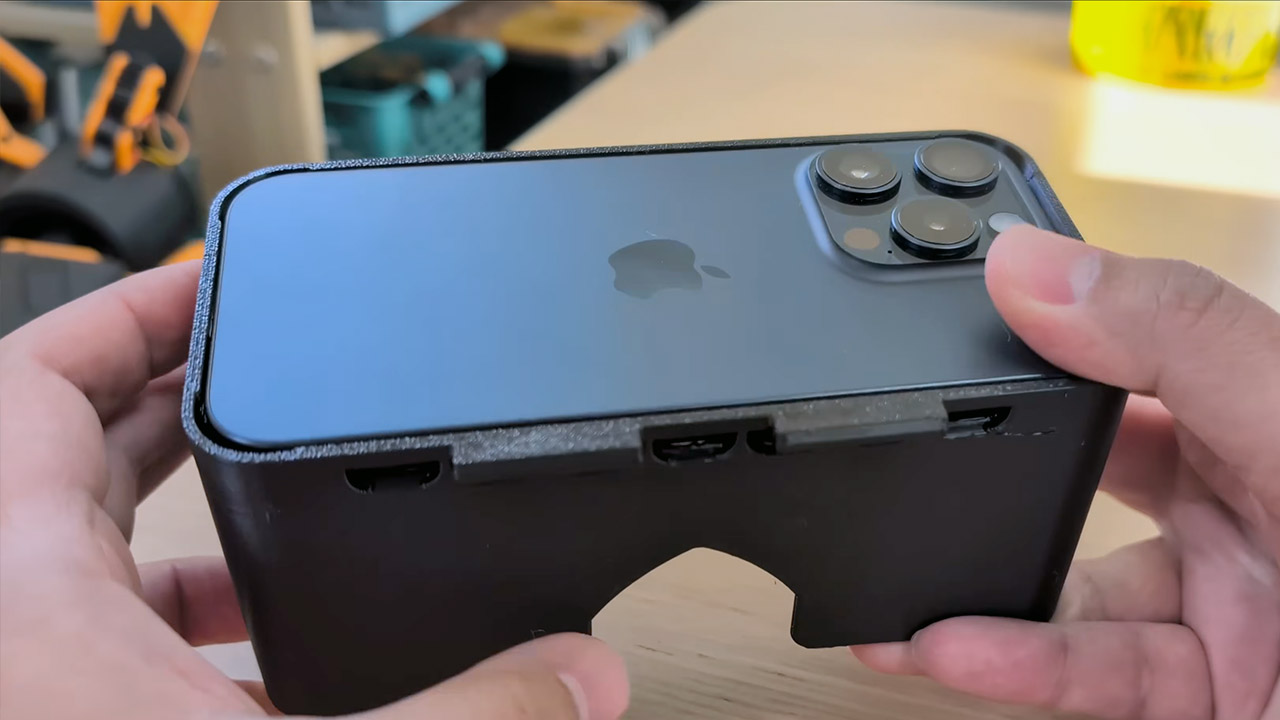
The front section, which comes in several sizes to match different phones, simply clicks into place and includes holes for the camera and bumpers to keep the item stable. The entire thing is held together using 1.75mm filament and has a piece of weather stripping along the edge for comfort. You can also attach it to the straps of other headsets using standard strap adapters.
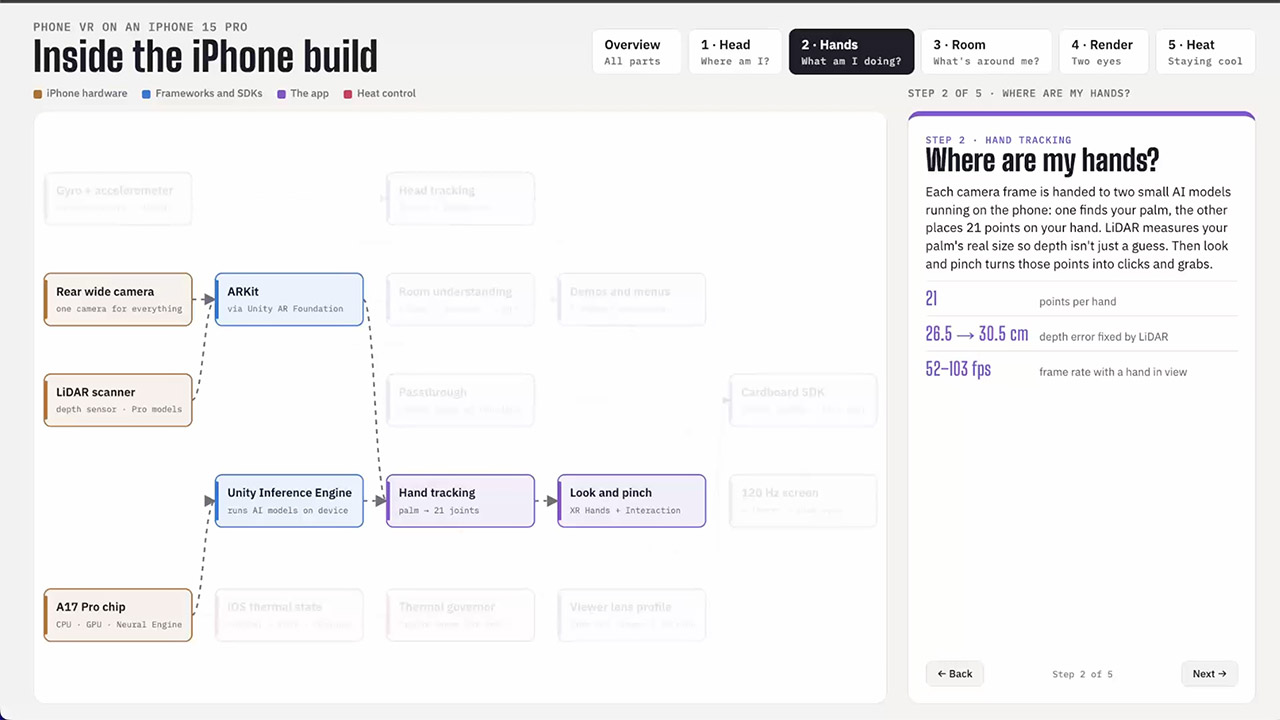
All tracking and interaction takes place on the phone itself, using a Unity app. It uses ARCore on Android and ARKit on the iPhone. Either system provides you with full six degrees of freedom, so the gadget knows what it’s doing in three dimensions rather than simply flipping around your head. The back camera also provides a live view of what is directly in front of you at all times. The software can detect floors, tables, and walls and utilize them as reference points, so virtual objects remain still while you move around them.
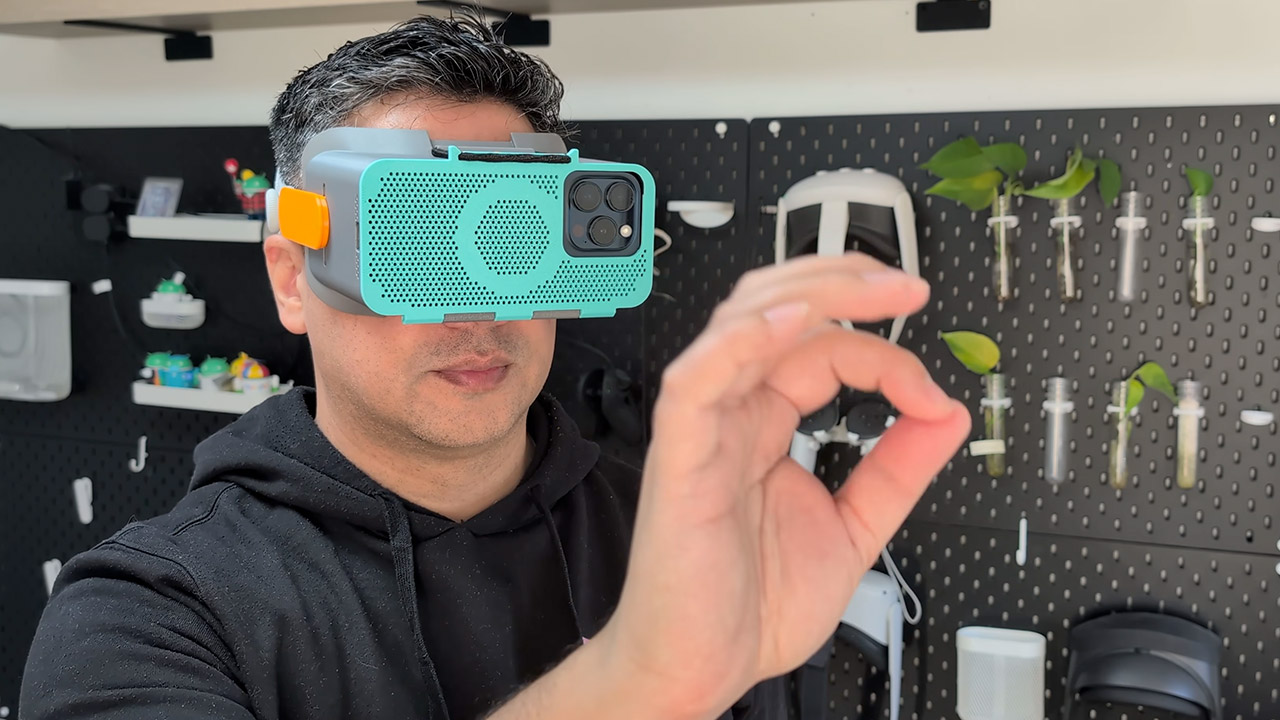
The hand tracking is powered by MediaPipe models that run on the phone and are processed by Unity’s inference engine. That means the camera can observe the hand in front of it, determine its size and shape, and translate pinches, grips, and pointed movements into actual inputs. The iPhone 15 Pro’s LiDAR sensor performs significantly better at detecting the hand. And, to ensure that you do not overheat, there is a thermal monitor that limits the hand tracking rate or frame rate if it becomes too hot to handle.
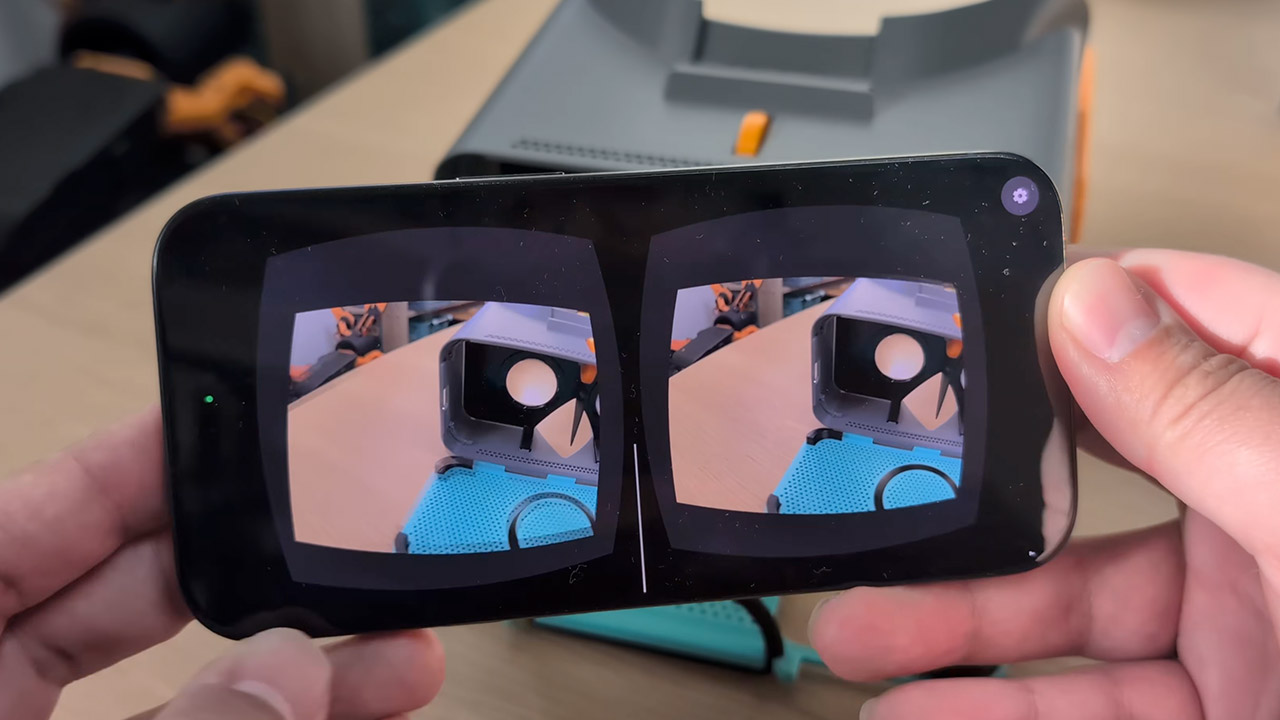
Brenpoly tested the build on a Pixel 9 Pro and an iPhone 15 Pro, which already had all of the required camera technology, sensors, and computing power. The $5 price tag includes the lenses and a little amount of filament. Anyone with a compatible phone and a printer can assemble the parts and download the free Apache licensed program, and everything is ready to go.
If you want to future-proof your Cardboard-XR experience, add-ons like a MagSafe fan or an external battery pack will help protect your phone from overheating and running out of juice during extended sessions, though they will cost you a little more than $5. On the other side, all of the source code, 3D print files, and browser tool for grabbing and creating a bespoke door from measured dimensions are available on GitHub and MakerWorld, ready for you to download and alter to your hearts desire.
[Source]
Maker Builds CardboardXR With Five Dollar Parts to Challenge Apple Vision Pro
#Maker #Builds #CardboardXR #Dollar #Parts #Challenge #Apple #Vision #Pro
