
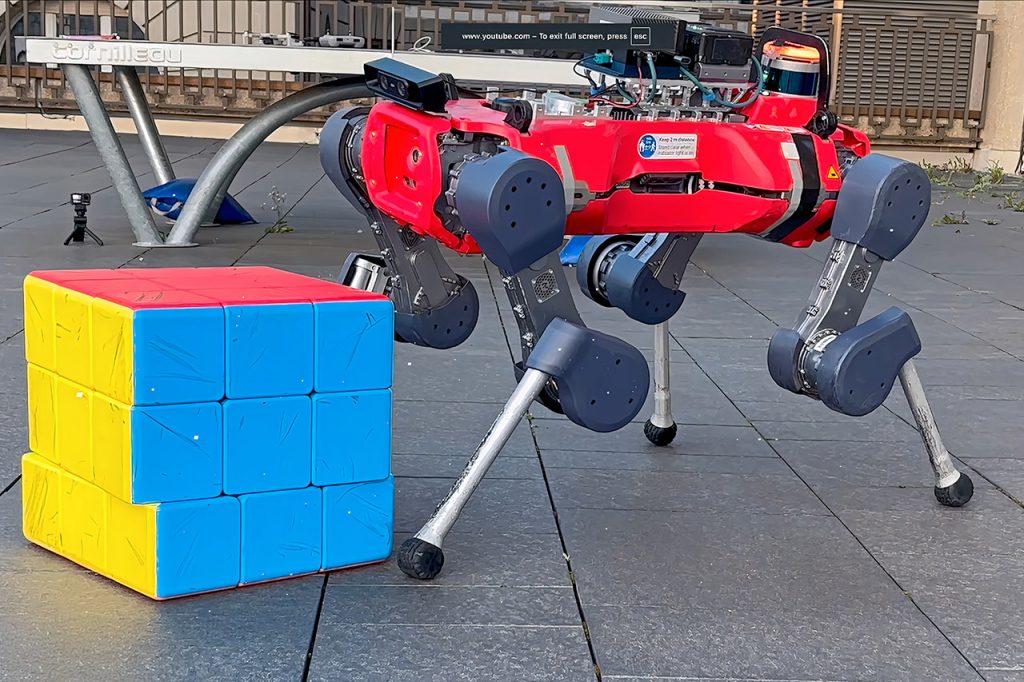
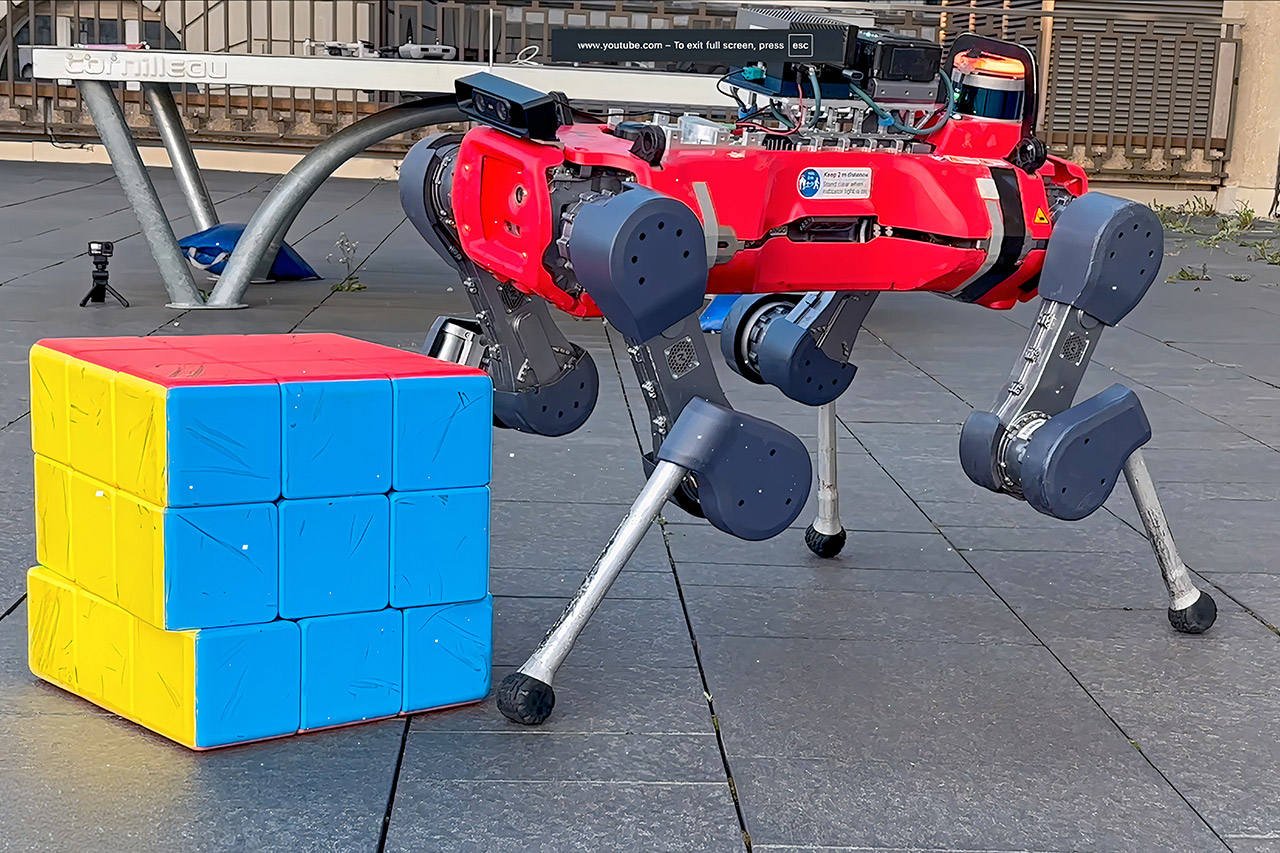
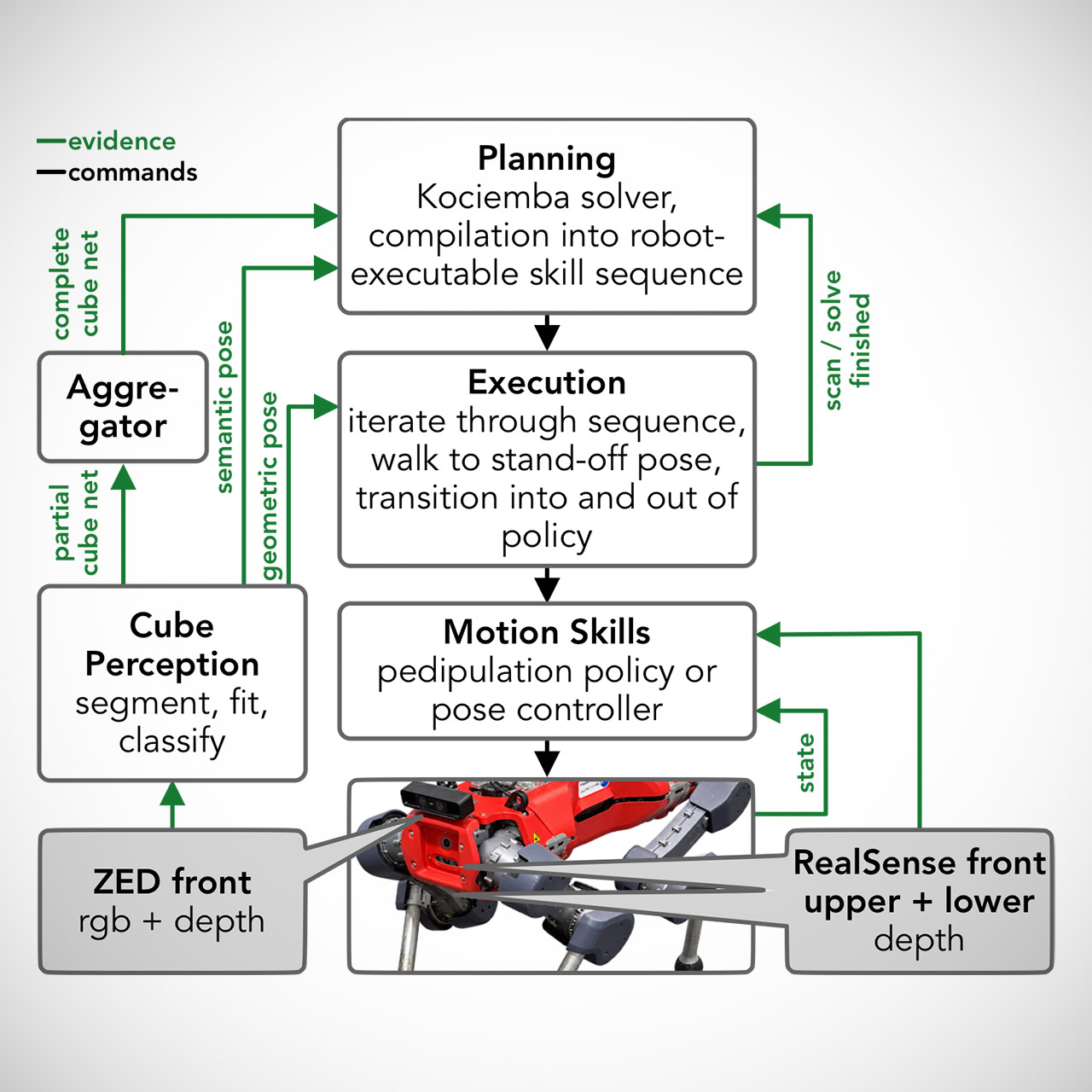
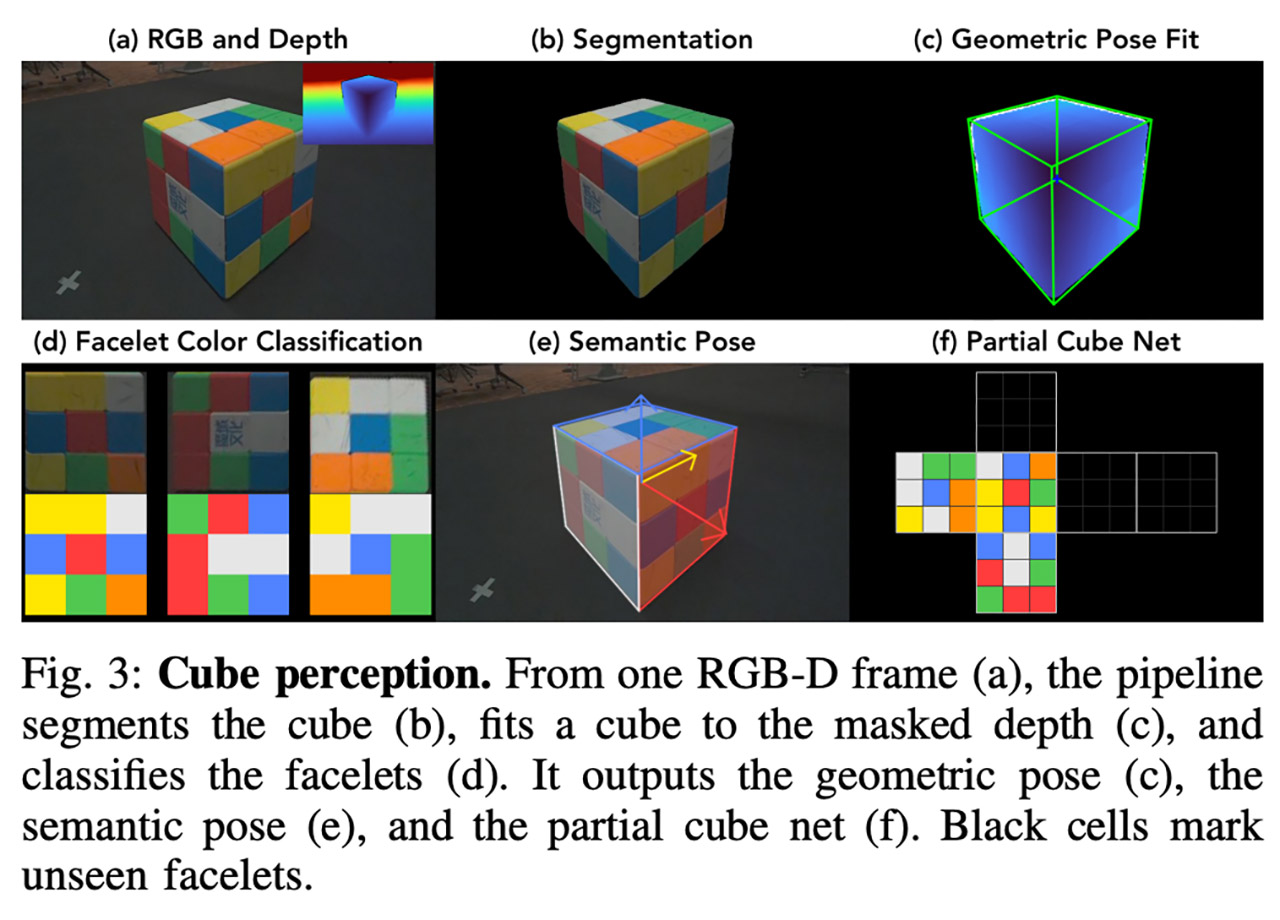
Researchers from ETH Zurich’s Robotic Systems Lab have shown that a standard four-legged inspection robot can fully solve a giant Rubik’s Cube on its own, relying entirely on its feet for every contact with the puzzle. The machine, an ANYmal-D, first walks around the freestanding cube and tips it onto different faces so its onboard depth camera can build a complete picture of the colors. Once it has that map, a planner turns a conventional cube solution into a short list of robot actions, and the machine carries them out without further help from people.
The cube is so heavy that flipping it over and rotating one layer is a completely different ballgame. A single slip-up, such as accidently twisting a layer while tipping, would entirely disrupt the sequence, thus the robot must maintain all of the layers locked in place while reorienting the cube, then consciously release them when it needs to turn a face. To tip the cube 90 degrees forward or backward, simply grasp an edge with one front foot and roll the entire thing onto a new face. To rotate a layer, the right foot firmly plants on the bottom half to keep the cube stable, while the left foot gently pulls the top half through a crisp quarter turn. To turn the layer the opposite direction, simply reverse the motion and repeat.

Unitree Go2 Robot Dog Quadruped Robotics for Adults Embodied AI (Go2 X) Built for Developers
- 【Next-Generation Robotic Companion: Meet the Unitree Go2 Robotic Dog】 The Unitree Go2 X is a powerful and intelligent quadruped robot designed for…
- 【Intelligent Navigation with 3D LiDAR & Obstacle Avoidance】 Featuring ultra-wide 3D LiDAR with 360°x96° perception, the Go2 X detects obstacles…
- 【High-Definition Vision & Seamless App Integration】 A front HD camera streams 1280×720 video to the app. Control the robot, view real-time data…
Initially, all of these motions were learned in a virtual setting. A teacher policy that could see every joint and contact point had to practice these abilities for several hours, earning prizes for landing its feet in exactly the right location, shifting the layers cleanly, and keeping its body straight.
The policies were then simplified and made into student controllers that run on the real robot, relying just on the depth images from the two front cameras and the robot’s joint readings. The resulting controls can tolerate minor differences in the cube’s position relative to the robot, recover if it slips or is bumped by an outside force, and continue working on low-friction surfaces, cobblestones, and even mossy surfaces.
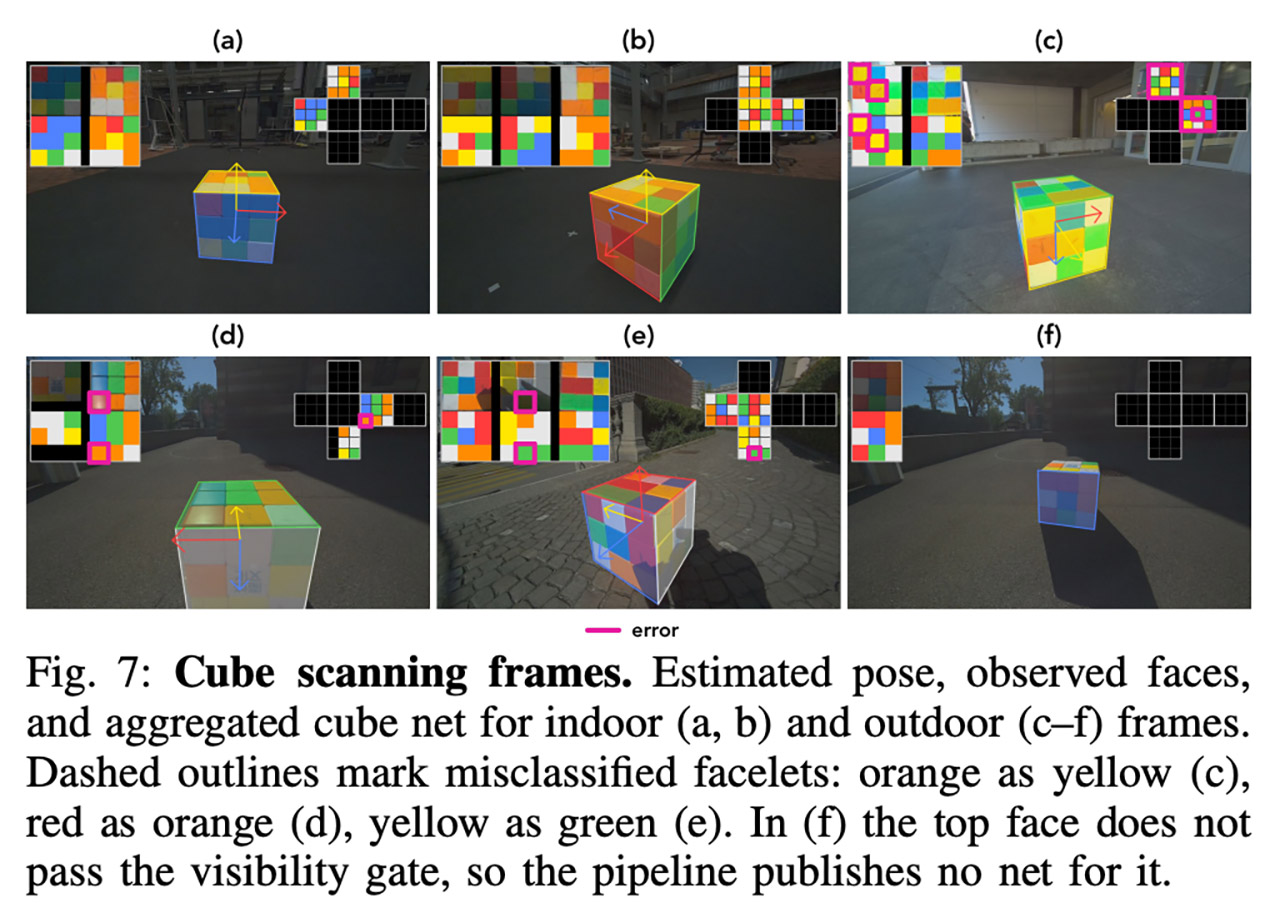
On the hardware side, the entire procedure consists of about 30 separate actions and lasts approximately 8-9 minutes. The team tested the autonomous system three times, and the robot solved the cube each time. The perception system adjusts the cube’s pose between each part of the sequence, allowing the robot to step into the correct starting position.
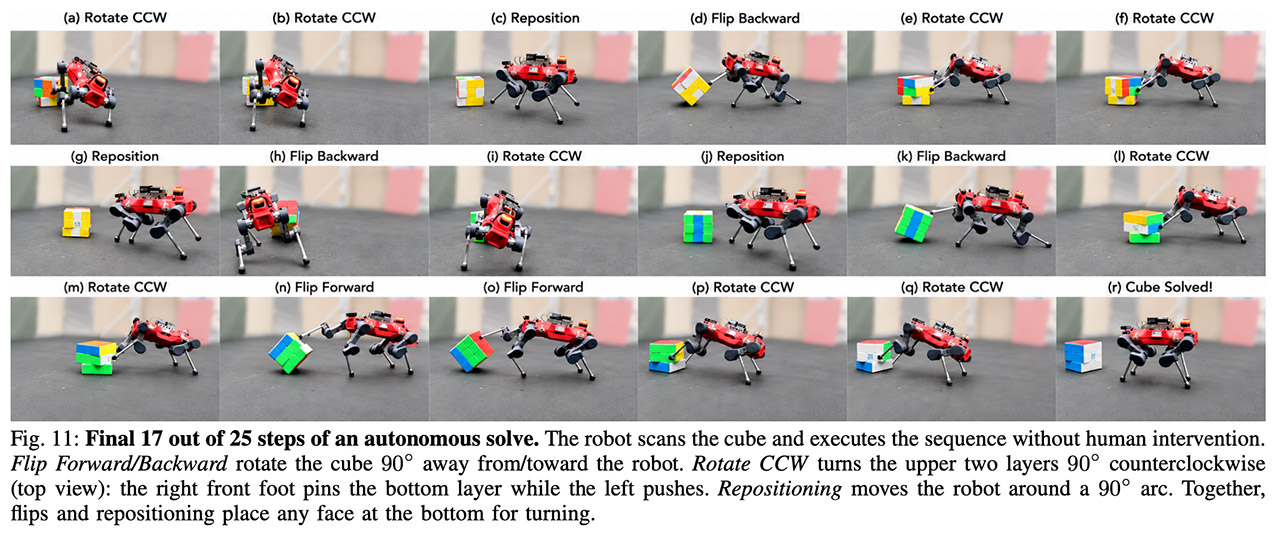
While the sequence is being executed, the learnt policy runs constantly and makes modest tweaks as it goes to rectify faults. The beauty of this is that the robot’s feet can also be the only tools that touch the cube, so this video shows how a machine designed for inspection can be taught to do a long chain of accurate, coordinated interactions without the need for any extra arms or grippers.
ETH Zurich ANYmal Robot Solves Giant Rubik’s Cube Using Only Its Feet
#ETH #Zurich #ANYmal #Robot #Solves #Giant #Rubiks #Cube #Feet
