
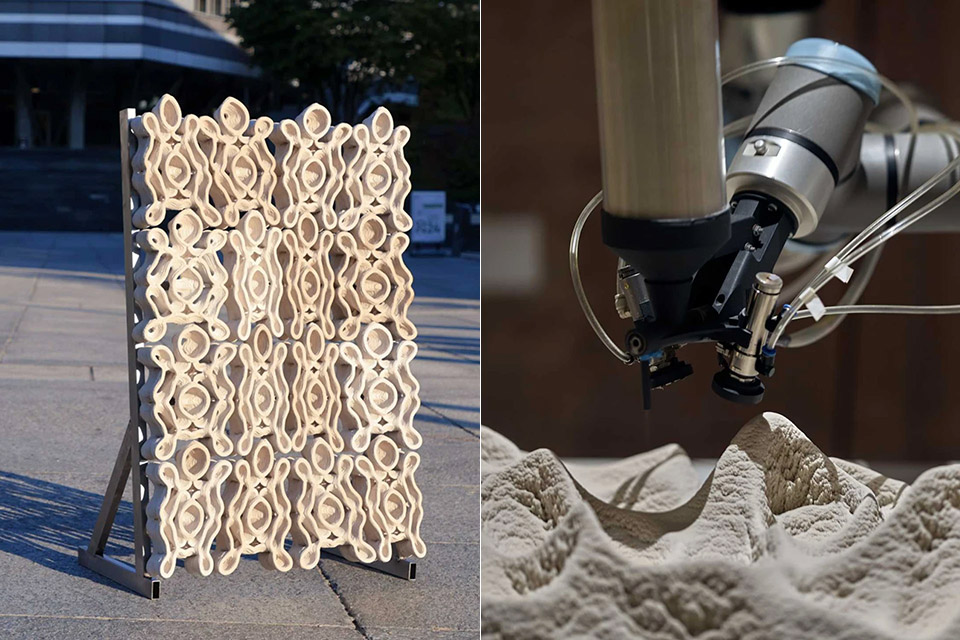
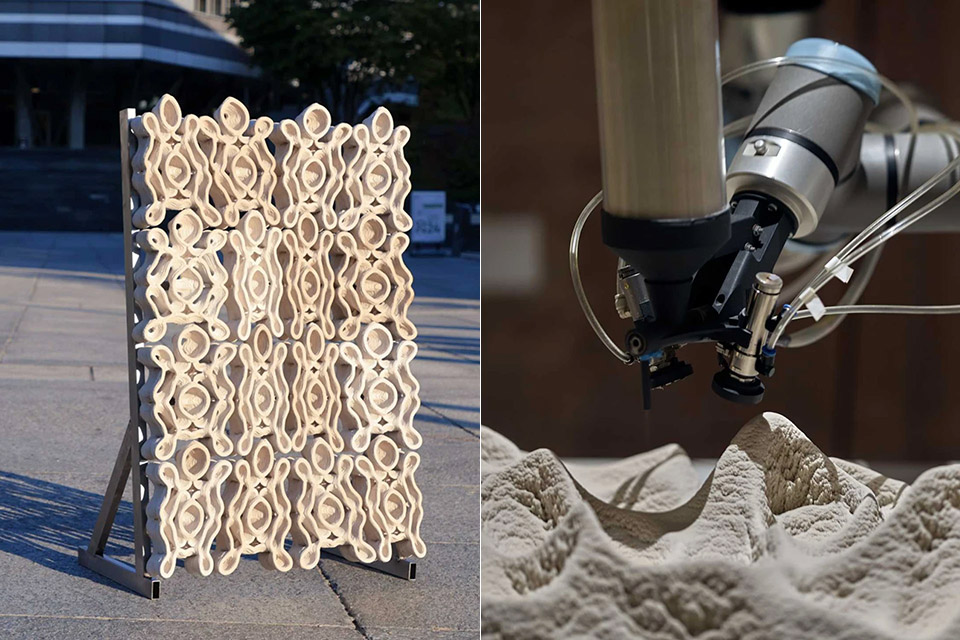
Photo credit: Gerhard Bliedung | ETH Zurich
Karen Antorveza Paez finished her doctorate at the Department of Architecture at ETH Zurich after years spent turning a known bacterial process into finished architectural pieces. Certain living bacteria called Sporosarcina pasteurii can lock loose grains of sand together by growing microscopic crystals of calcium carbonate between them, the same mineral that forms limestone and seashells.
Cement facilities heat rock to a thousand degrees and emit a lot of carbon dioxide in the process. Antorveza Paez combines the bacteria with sand and a water-based gel consisting of alginate and xanthan, which allows the mixture to retain its shape long enough to be printed. Next, a conventional 3D printer lays out the mixture in whatever shape the design requires. After printing, the object is simply immersed in a mixture of urea and calcium chloride. The clever part is that the bacteria then employ an enzyme called urease to degrade the urea, releasing carbonate ions that link with calcium to create calcite crystals. These crystals grow between the sand grains and eventually stick together to form a solid chunk.

Bambu Lab A1 mini 3D Printer + LED Lamp Kit, Ready-to-Use for Beginners | Beginner-Friendly Ecosystem…
- A1 mini + LED Lamp Kit for Creative Light Projects: Bring your ideas to life with the included LED Lamp Kit. Simply print compatible lamp models and…
- The Perfect 3D Printer for Beginners: A1 mini 3D Printer is designed to make 3D printing easy from day one with automatic calibration, simple setup…
- Experience the Bambu Lab Ecosystem: Access MakerWorld’s huge library of ready-to-print models, manage prints through the Bambu Handy app, and enjoy…
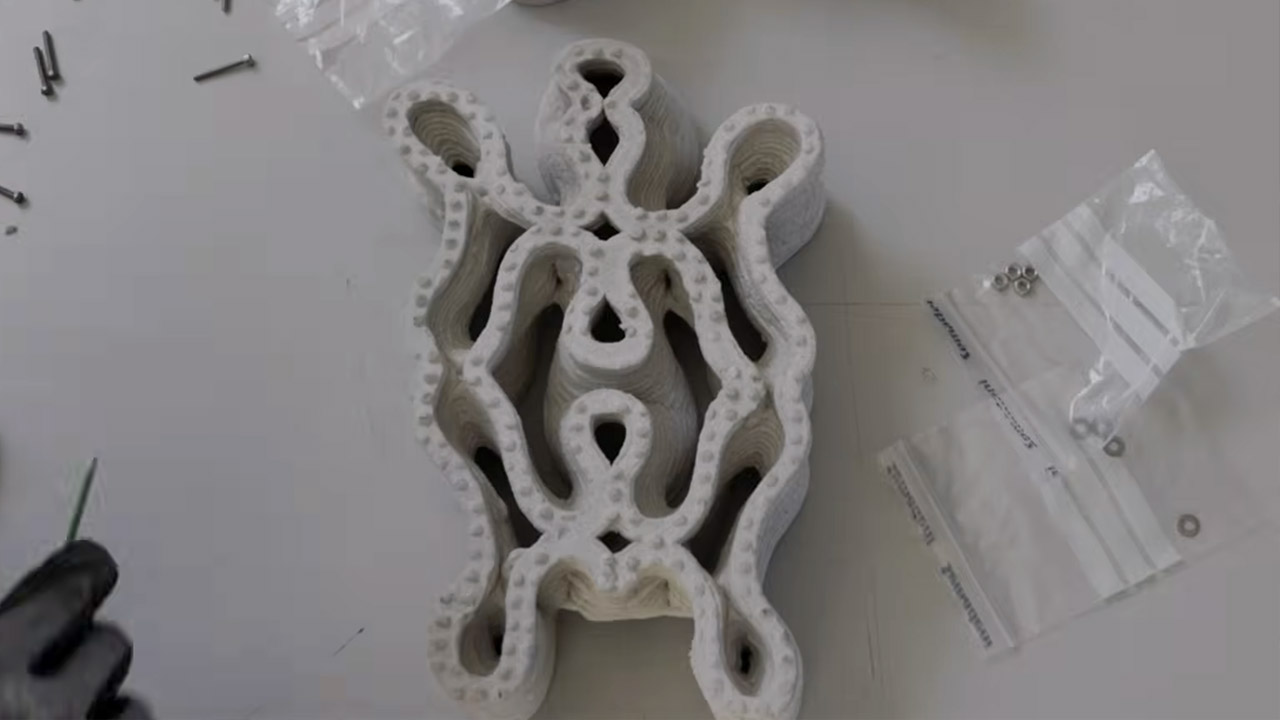
Fresh solution must replace the old bath each day. After 2 to 5 days, you may take the object from the liquid and allow it to dry naturally at room temperature; once dry, the bacteria are no longer active, and you’re left with a strong, hard structure that is ready to go. We’ve now seen an example of this in action, since it was a facade piece designed to create cool light patterns or to function as a partition wall. The printed samples have a compressive strength ranging from half to two megapascals, depending on the design and direction of the load. That is essentially equivalent to the material used to hold bricks together, but not as strong as the concrete used for floors or foundations.
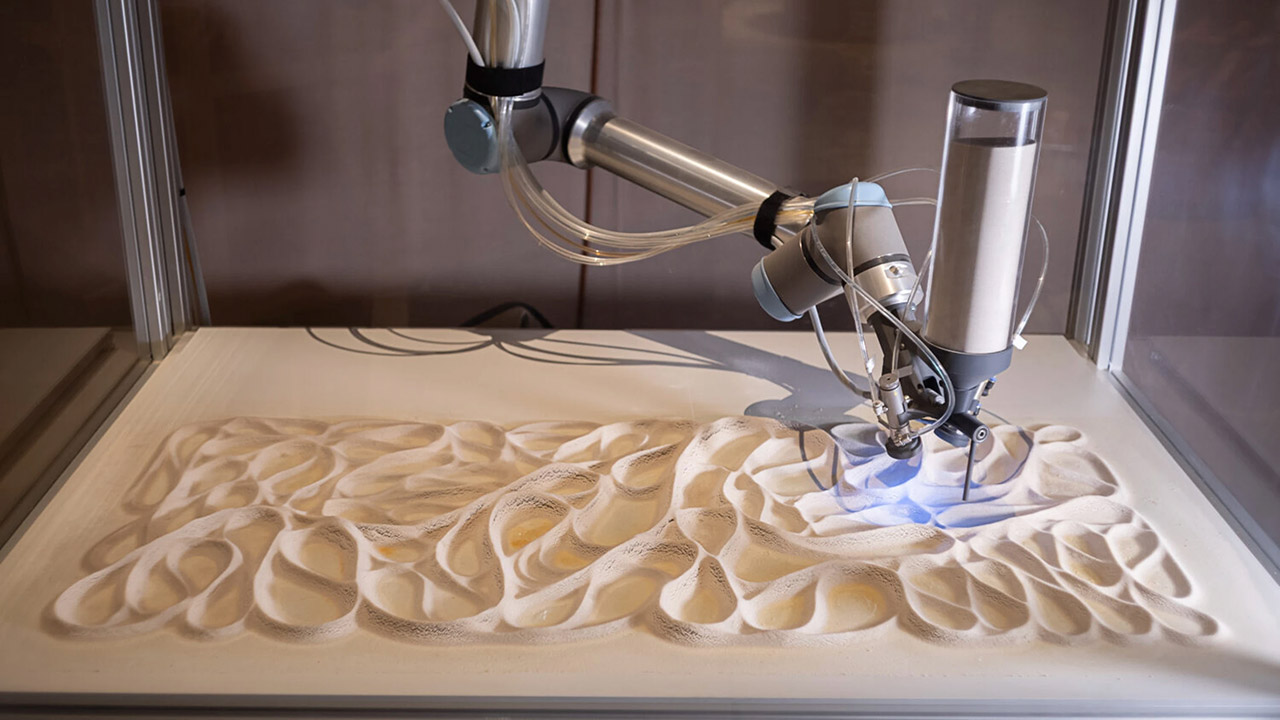
That isn’t the only way to go about it; a second method completely avoids the bath. Instead, a robot arm sprays layers of bacteria, mineral solution, and sand one after the other, allowing the same crystal formation to occur in place. In actuality, this arm ran nonstop for six months at the 2025 Venice Architecture Biennale. As a result, this approach is more suited for freestanding elements than the other, which is better for covering continuous surfaces.
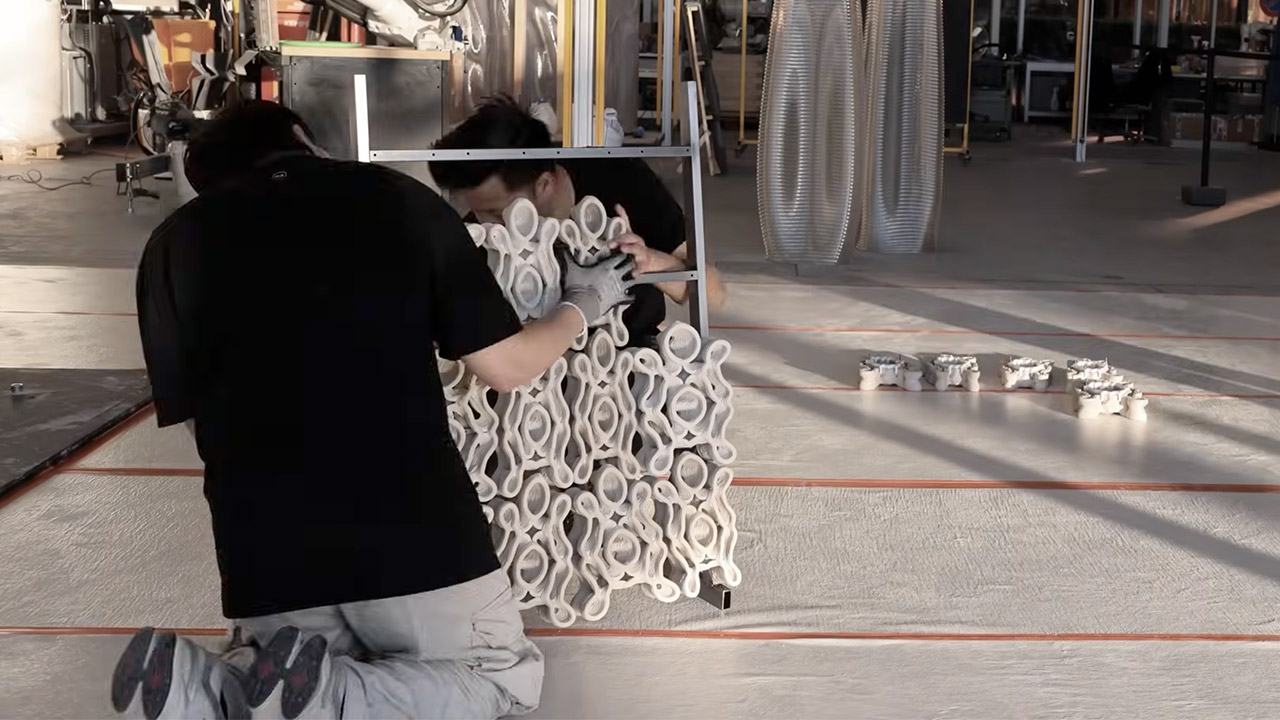
One potential issue with this strategy is that the breakdown of urea releases ammonia as a byproduct, which must be neutralized before you can begin producing anything on a larger scale. As for the sand particle size, it still has an impact on the final strength and porosity of the finished product, therefore further testing is required. Three articles were published in 2026 that addressed some of these concerns, including the printing process, the robotic spraying method, and a design strategy for making porous structures. The fact that these objects may now stand up as solid architectural features comprised of sand and bacteria at ambient temperature is significant because it eliminates the requirement for the high-heat stage required with traditional cement.
[Source]
Bacteria Become Masons Binding Sand Into Solid Structures at ETH Zurich
#Bacteria #Masons #Binding #Sand #Solid #Structures #ETH #Zurich
