
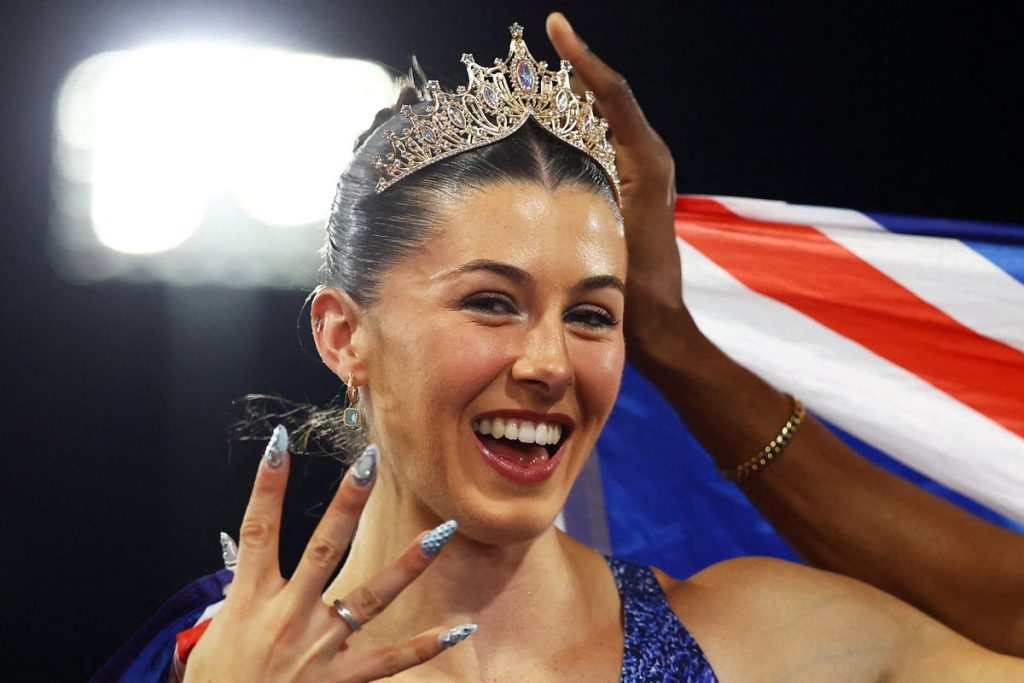
Amy Hunt’s expression was equal parts joy and amazement as she crossed the line for the last time at Birmingham’s Alexander Stadium, before holding up four fingers to the camera as the realisation of what she had achieved dawned on her.
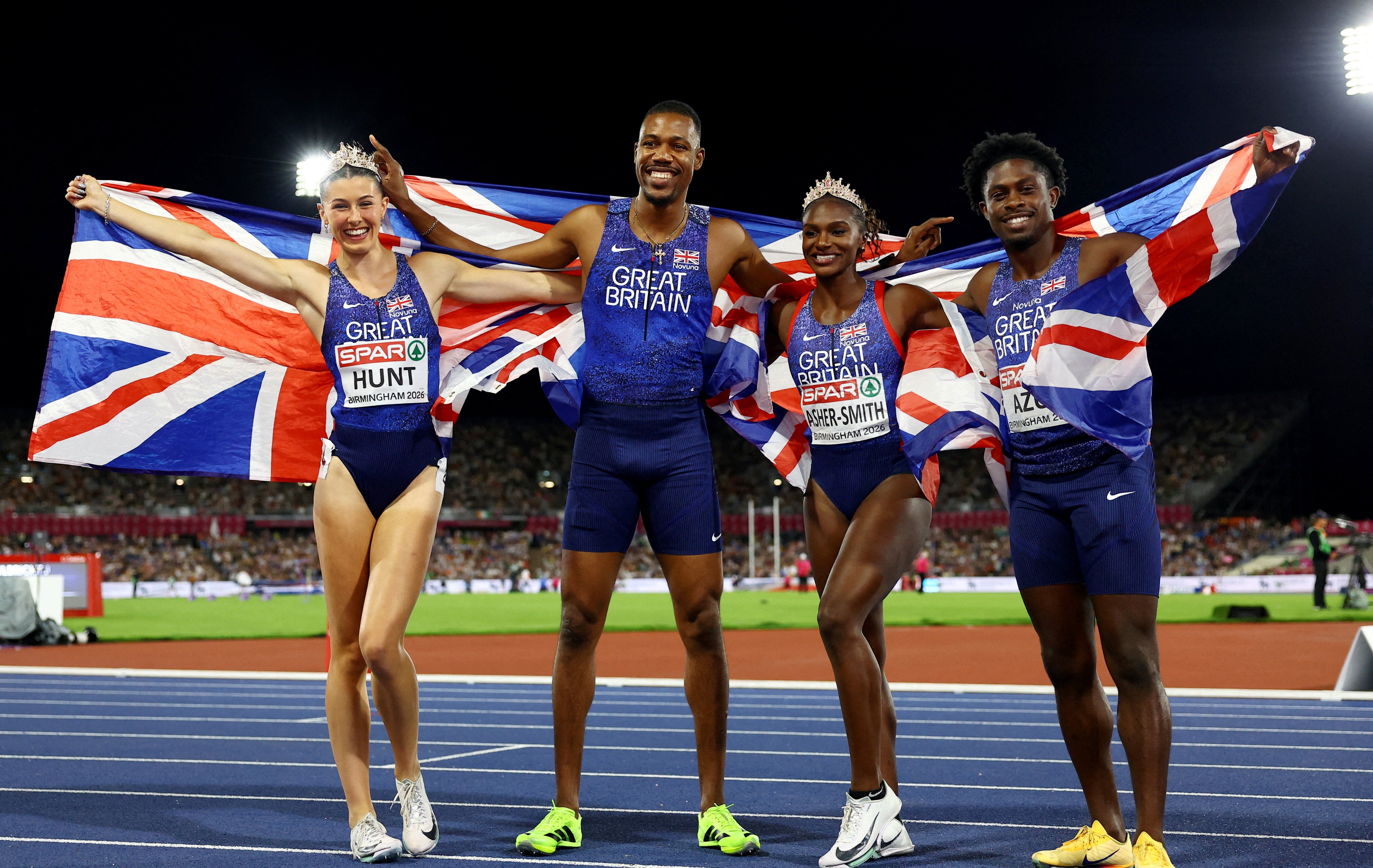
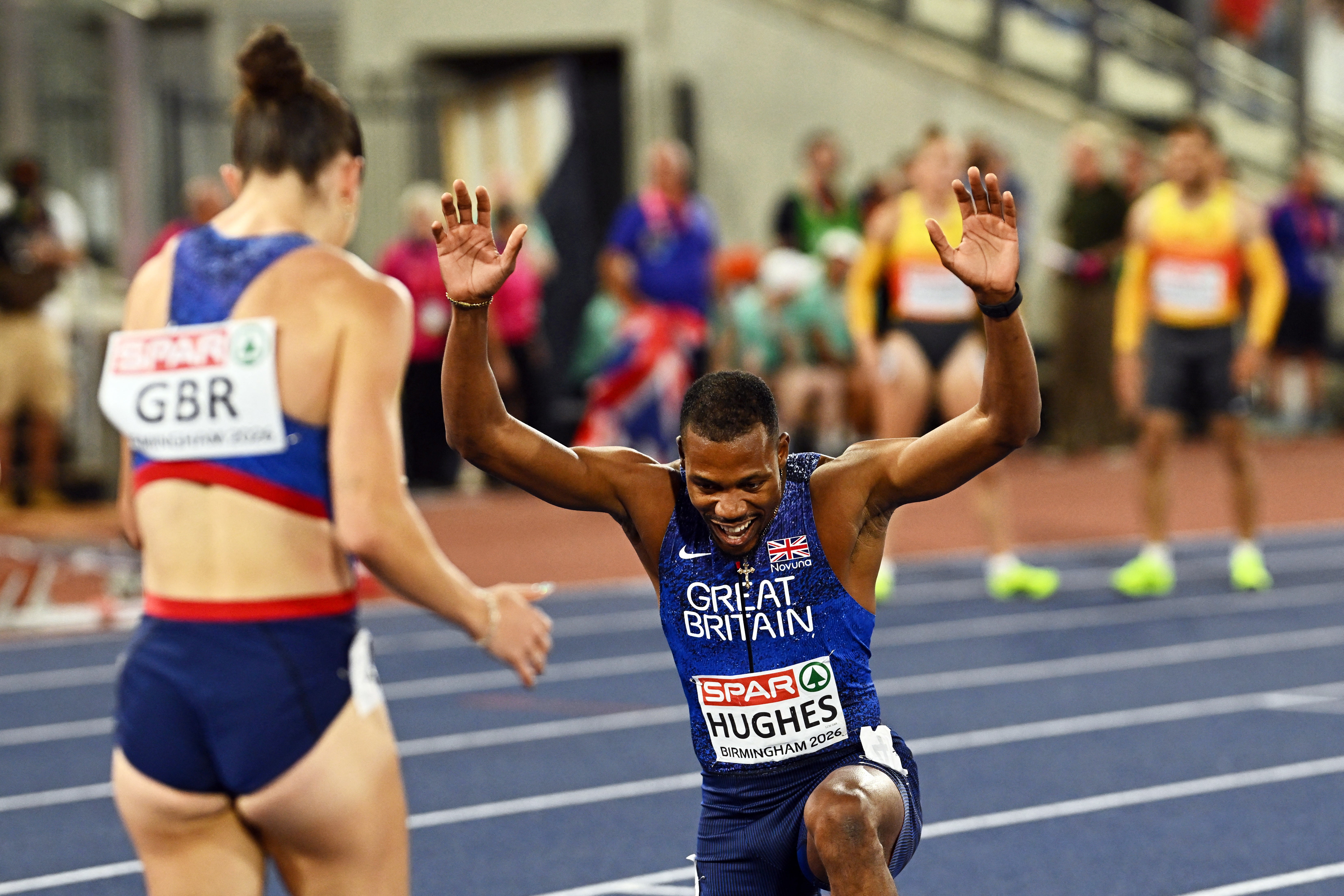
The 24-year-old made history as the first to win four golds in the 92-year history of the European Championships, completing the individual 100m and 200m double before winning both the women’s 4x100m relay and the experimental new mixed 4x100m relay.
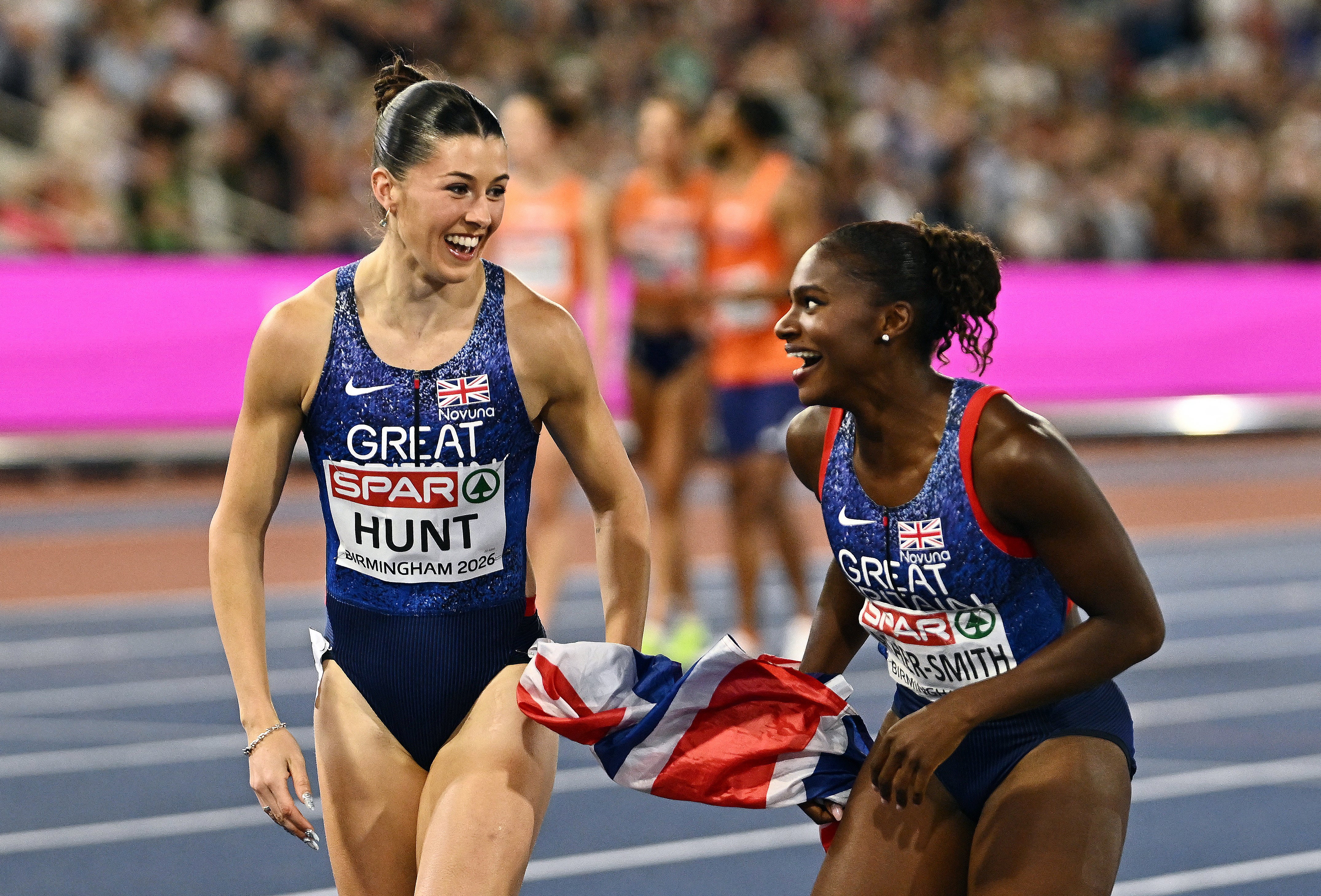
The latter two victories came alongside Dina Asher-Smith, newly crowned the most decorated athlete of all time at European level. The first two wins were against her – the baton (literally) passing from one British sprinting great to who it is hoped will be the next.
Hunt made no secret of her drive to win that unprecedented set of four golds, freely saying “I’m looking to be iconic” before her bid for history. She is a charismatic and engaging personality, a sprinter with a tendency towards the showmanlike, roaring “Are you not entertained?” in glee as she sealed the individual sprint double.
That showmanship is offset by a fierce work ethic, evident in her first-class degree from Cambridge as much as in her work on the track. She said this week: “I’m just so proud of myself and the way I’ve handled this week – the emotions, the recovery and being strict and staying disciplined after all the highs. I’ve stayed true to myself and true to the job I came out here to do.”
She said “no champagne until Sunday” after ticking off two of her four races, but after some time to celebrate the scale of her achievements, attention will soon turn to the future.
So what next for the new face of British sprinting? The scariest thing for her rivals is how much room there still is for her to improve, most notably in her start. At nearly 6ft tall, she is never the quickest off the blocks, and was seventh of eight finalists by the 10m mark of the 100m final. She has previously detailed a “love-hate relationship” with the 60m, her worst of the three sprint disciplines, and the one most reliant on an excellent start.
It is her finishing speed which is her biggest strength, alongside a total, unshakeable self-confidence in her own ability, which has seen her thrive on the biggest stages. She told BBC Sport she felt her 100m victory this week was “preordained”: “It was in the air and I knew it was going to happen, regardless of whatever anyone else was doing.”
Hunt has entered major races somewhat under the radar – notably at the world championships last year, when she won 200m silver in Tokyo – and as the favourite in every race this week. She has shown that the weight of expectation does not faze her.
She has never hidden her ambition, telling The Independent and other media before this year’s World Indoor Championships of her desire to beat the likes of double world champion Melissa Jefferson-Wooden and Olympic champion Julien Alfred: “It’s not even delusional, because you can’t think it’s delusional; you have to fully, wholeheartedly, with your whole body and soul and mind, believe that you are the best and you’re going to beat everyone.”
She may have that belief, but there is significant work to do in translating her continental prowess into becoming a serial threat at world and Olympic level. Over the course of this year so far, she is 14th-fastest in the world over 200m and 25th-fastest over 100m, while health issues have prevented her from reaching her full potential over the longer distance this season.
After the 200m race at the London Diamond League, she was dispatched to the medical tent feeling faint, with tests ultimately revealing low blood pressure to be the cause. It has meant that this year she has focused on speed work but not been able to commit so much to endurance efforts, leaving her with room to develop in the 200m in the future. But she has reaped the rewards of that speed work, lowering her 60m personal best to 7.04 seconds this year, and going under 11 seconds for the first time in the 100m.
Hunt has stressed her admiration for the likes of American great Allyson Felix, the most decorated athlete of all time at world championship level and a multiple world and Olympic medallist in each of the 200m, 400m and 4x100m relay. “I really love being such a versatile sprinter. All of the sprinting greats, Usain [Bolt], Allyson [Felix], Dafne [Schippers], Tori Bowie, everyone who is truly the best at these events, do all of them,” she said earlier this year. She has said she “would love to step up to the 400m”, like Felix, with her top-end speed making that a frightening prospect, while the additional strength involved in that race would give her an extra edge over the shorter distances.
Her next major targets will be the world championships in Beijing next year, themselves a natural stepping stone to the ultimate goal: the Olympics in 2028. If the 400m is in her sights before the next Olympic Games, the world indoor championships in Bhubaneswar, India, a couple of months before LA, would be the ideal place to test the waters, in the absence of a 100m or 200m race on the short indoor track.
Or, if her focus is on an Olympic sprint double, as seems more likely, the world indoors would be the last chance to fine-tune her 60m – and focus on that all-important start out of the blocks – in a race setting, while giving her the chance to settle some unfinished business, having missed out on the final this year by two-hundredths of a second.
Success over every distance will go some way to securing a glittering legacy, a concept she is preoccupied with. Having been one of relatively few top athletes to prioritise the Commonwealth Games last month, she explained her reasoning as: “I don’t want to go on my Wikipedia page in 30 years’ time and just see one or two medals. I want to see lists and lists of medals.”
She was complimentary about teammate and rival, “the GOAT” Asher-Smith, whose longevity has been an inspiration to many British sprinters, with the 30-year-old still winning international medals 13 years after her senior debut.
But just as she overhauled her in the 200m, the fiercely competitive Hunt will try to overhaul her over the course of her career. Asher-Smith still holds the national record over all three sprint distances, as well as a clear superiority in international medals, and the passing of the baton is not quite complete. Four medals in Birmingham this week will do nicely; now Hunt, no stranger to hard work, will get stuck into her next chapter.
