
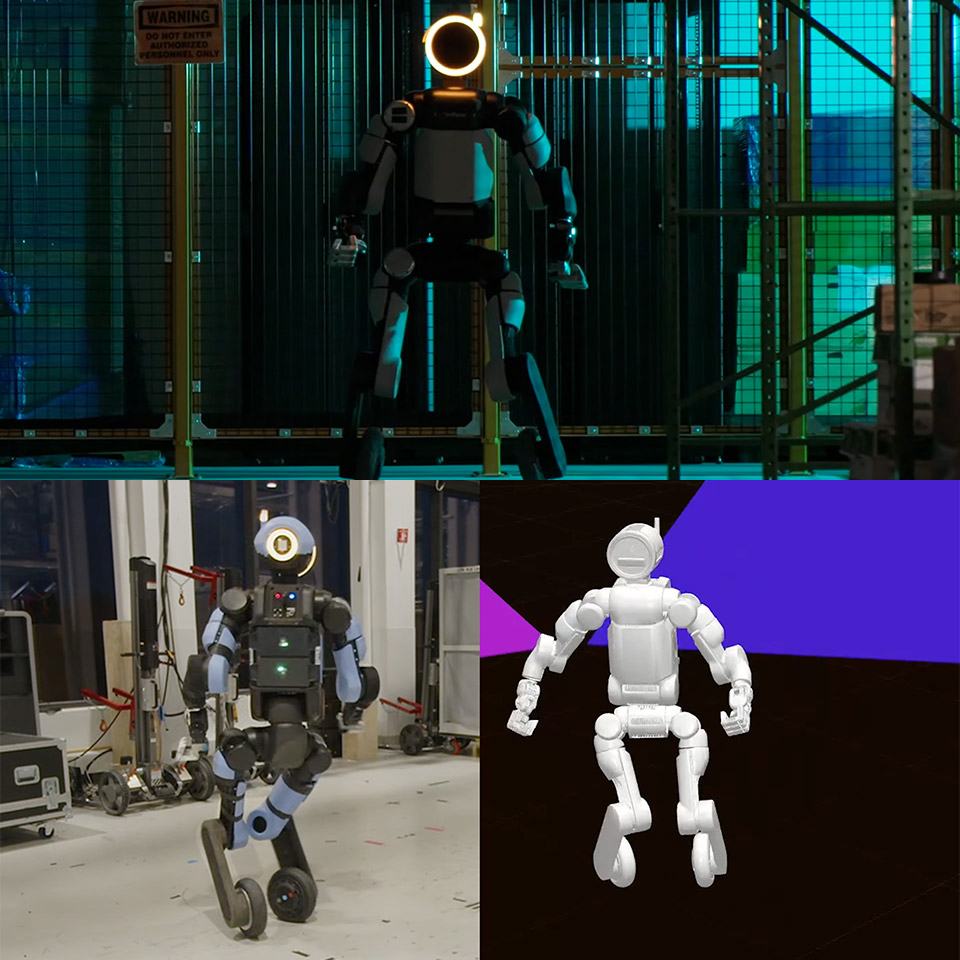
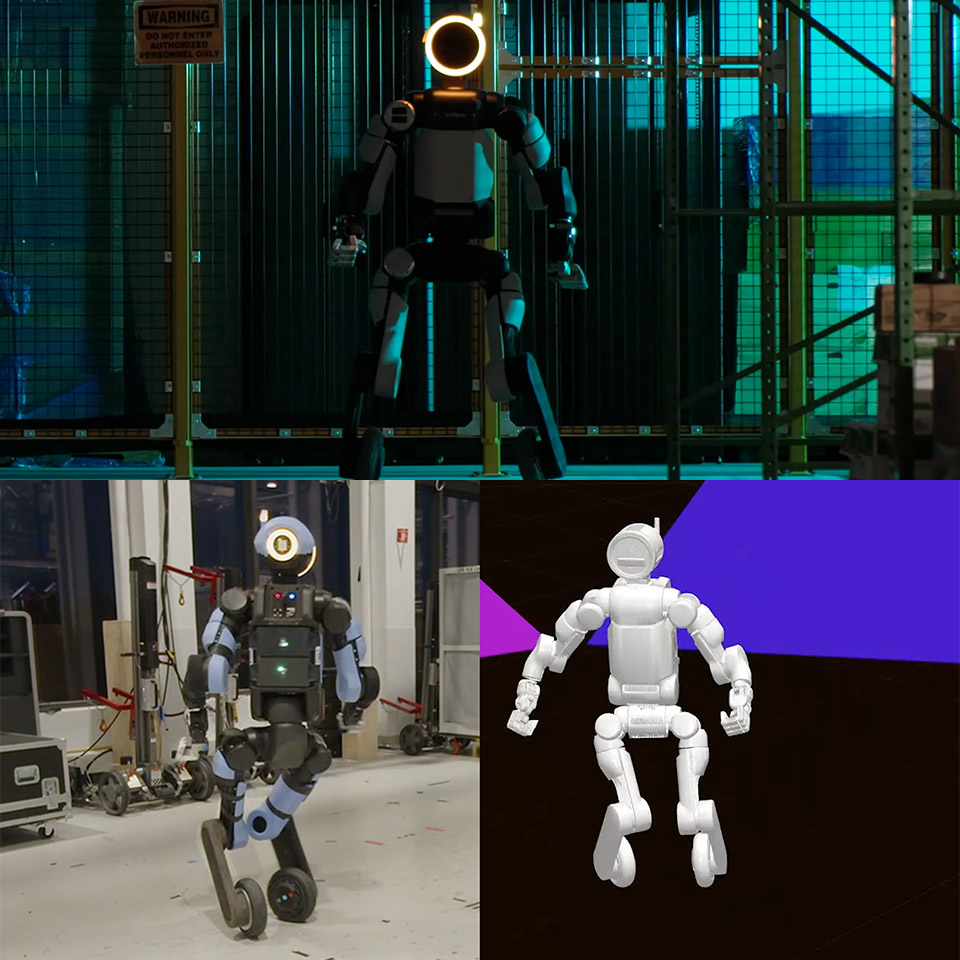
Boston Dynamics recently swapped the feet on one of its electric Atlas humanoids for scooter wheels and let a learned controller take over. A single custom adapter mounts an off-the-shelf scooter rim straight onto each existing ankle actuator, and that adapter is the only new part in the entire build. Because the robot was already designed for high-volume production and easy service, the change took about as much effort as swapping a bicycle wheel. In software the team simply modeled each wheel as a spinning ankle, then trained the same whole-body controller they use on the walking version.
Wheels gave motors a run for their money, which conventional walking cannot match. Every launch, spin, and stop is like a power-up for them, pushing the actuators to the limit of their capabilities, and the robot must support its own weight the entire time, so it is not having an easy day. This continuous load was actually rather valuable for determining how well simulated motor behavior compares to the real thing. First, they simulated millions of floors, and then they tested the accuracy of their motor models by putting them into various parameter checks and characterization tests to ensure that the policy would not create moves that real actuators could not handle. Once they found a suitable match, the policy was translated to the real robot, with only a few changes to the rewards, command ranges, and posture.

Unitree G1 Pro Humanoid Robot(No Secondary Development)
- Sleek & Durable Design: Standing at 132cm tall and weighing only approx. 35kg, the G1 is constructed with aerospace-grade aluminum alloy and carbon…
- High Flexibility & Safe Movement: Boasting 23 joint degrees of freedom (6 per leg, 5 per arm), it offers an extensive range of motion. For safety, it…
- Smart Interaction & Connectivity: Powered by an 8-core high-performance CPU and equipped with a depth camera and 3D LiDAR. It supports Wi-Fi 6 and…
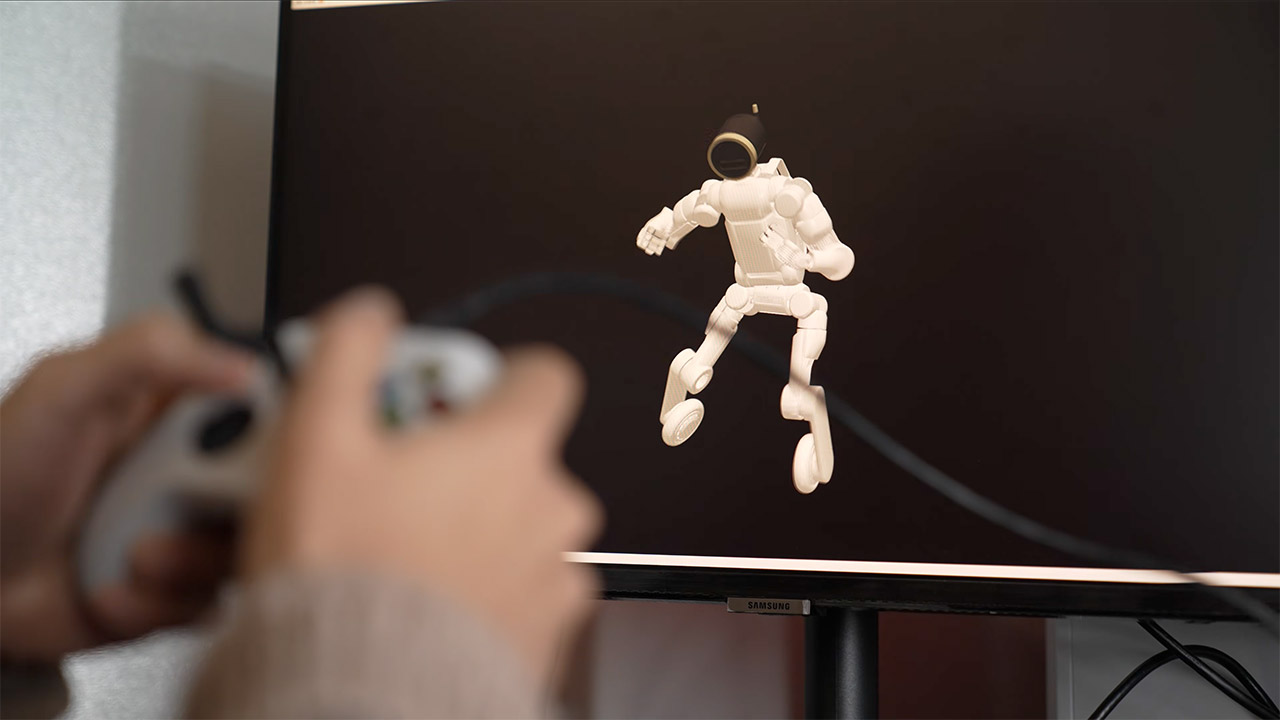
Side dashes appeared pretty quickly. In person, you’d simply slide your feet, but their controller could drive the wheels through the action, and it was all based on human motion capture video that already had the sliding motion. A 360-degree jump, on the other hand, was a major difficulty, but it turned out to be a breeze after it followed a recorded human trajectory and functioned on the first try. As the jump approached, the policy positioned the robot’s lower body to provide the upward push, and utilized some clever footwork to achieve that upward momentum, since this was where the entire wheeled component really shined. The result stayed stable and responsive, with control that felt intuitive enough for the engineers to describe the robot as fun to drive.
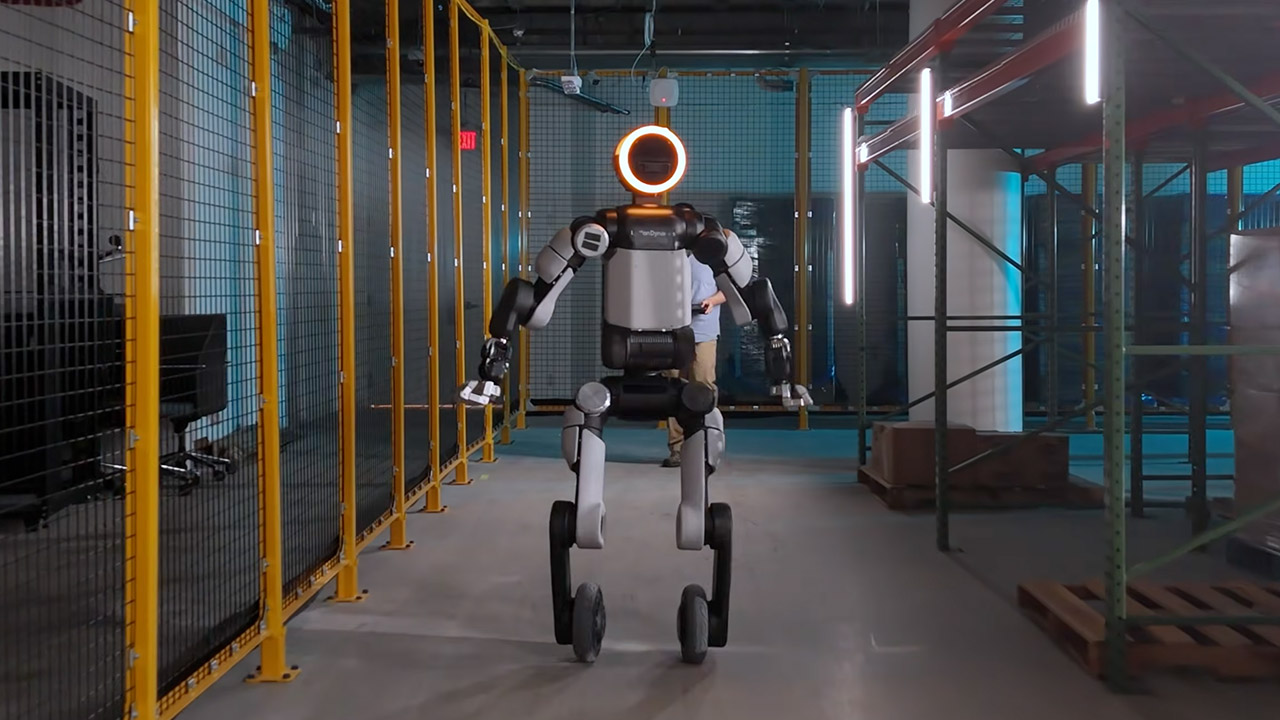
We’re already seeing learning from the wheeled testbed being pushed back into the Atlas configuration. Tightening the linkages between actuator dynamics and whole-body learning has enabled the walking robot to push its hardware to its limits, recovering from disturbances much more smoothly and expanding its repertoire of safe-ish maneuvers. As for the wheeled version, it will remain a research tool rather than a commercial solution. The thing is, it demonstrates that all it takes is to provide the controller a new means of interacting with the ground, and you can have some very useful behavior for free that is just waiting to be discovered.
Boston Dynamics Puts Atlas Humanoid on Wheels and Watches the Robot Roll, Jump, and Dash
#Boston #Dynamics #Puts #Atlas #Humanoid #Wheels #Watches #Robot #Roll #Jump #Dash
