
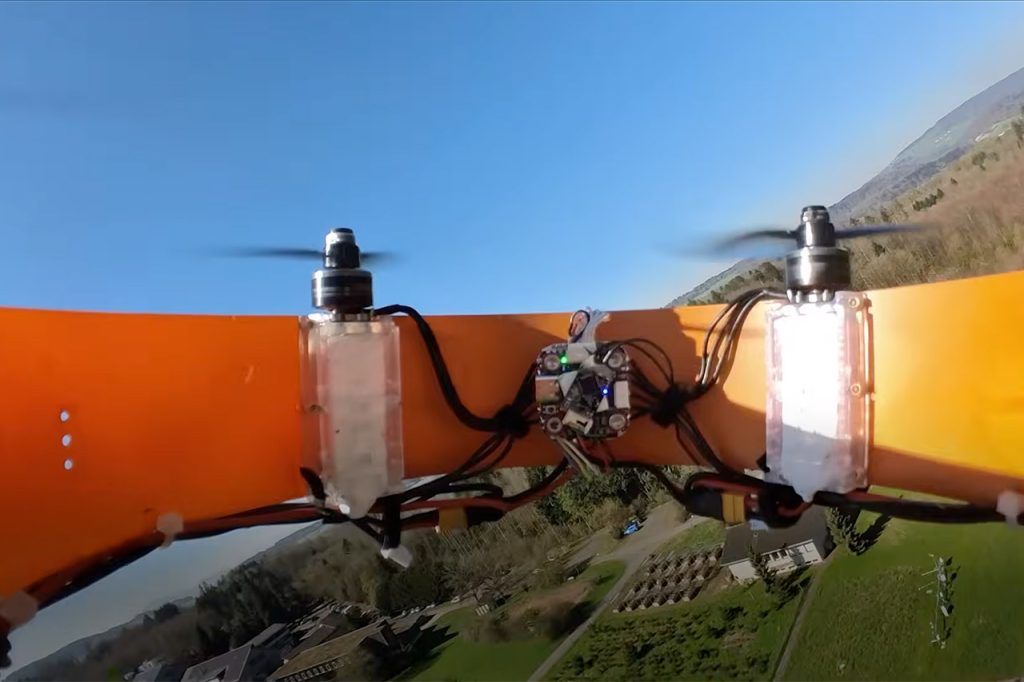
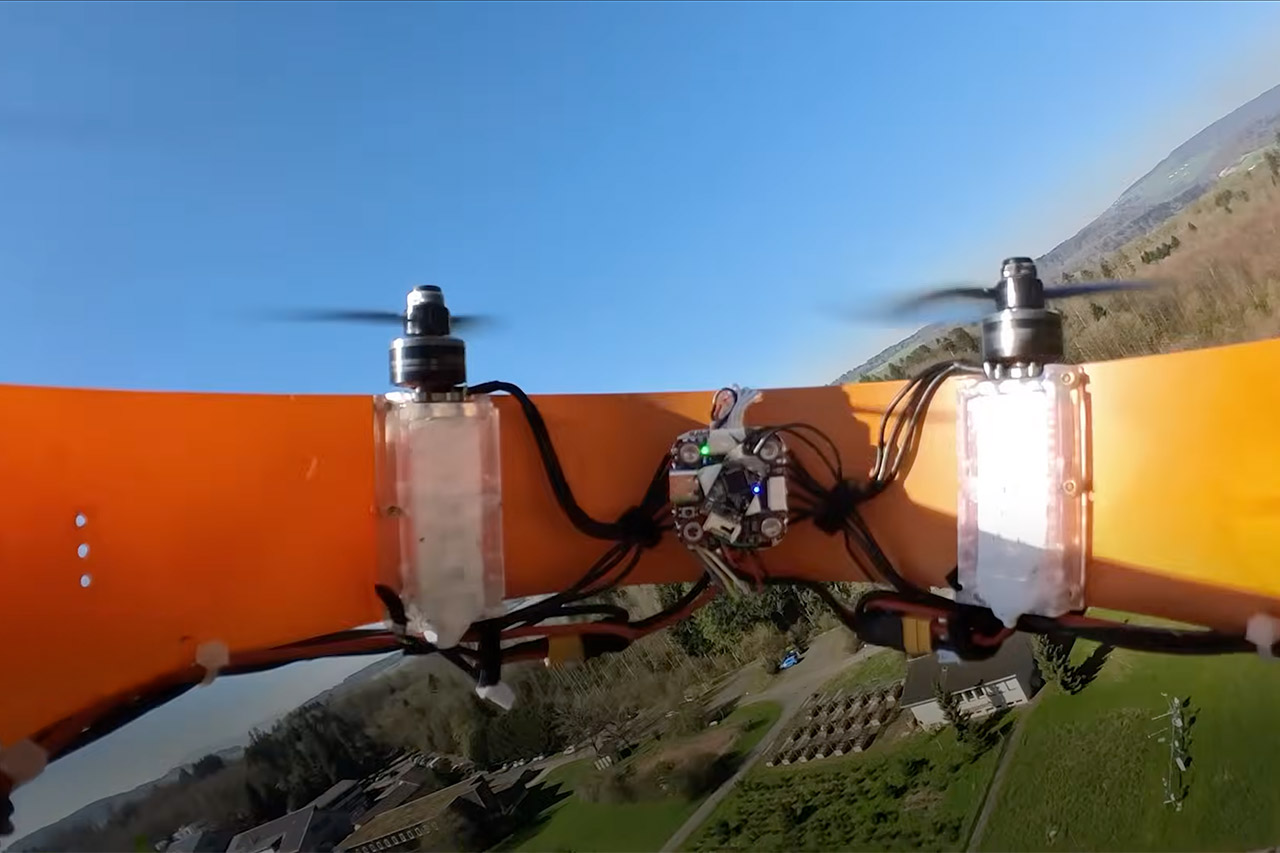
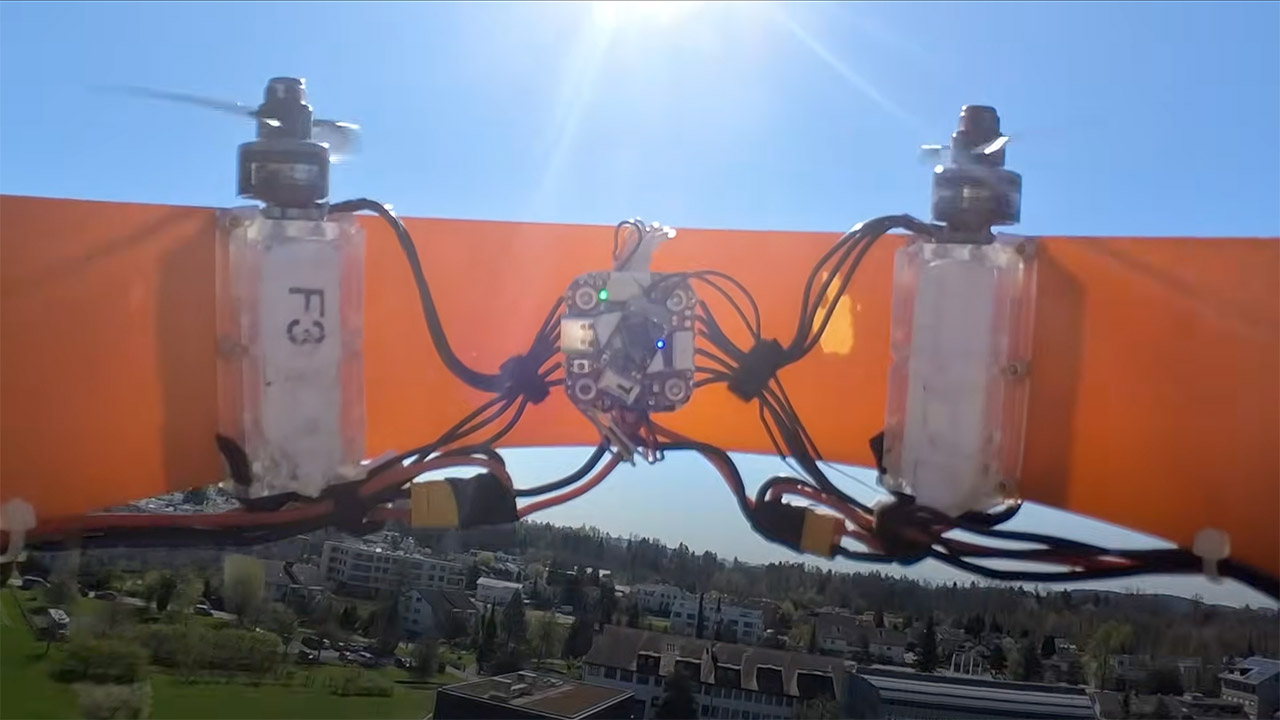
Luca Girardi and Stefano Mintchev spent years at ETH Zurich’s Environmental Robotics Lab refining a four-rotor drone that looks more like a bright orange ring than a conventional flying machine. Rotors, batteries, and the flight controller sit evenly spaced around that soft loop, with nothing in the middle. When the prototype hits an obstacle the frame gives way sideways, soaking up energy before springing back. Vertical stiffness stays high enough that the motors still push the craft through the air without losing control.
Girardi later picked up and moved on to the Mobile Robotics Lab, while Mintchev accepted a position as a professor of agricultural robotics at the University of Bonn. They went on to patent the idea and received a nomination for ETH’s 2026 Spark Award. In actual lab flight tests, the 405 gram prototype was able to reach speeds of over 80 kilometers per hour and produce significant linear accelerations as well as angular rates greater than 300 radians per second squared, putting it on par with rigid quadcopters of a similar size.

DJI Neo 2 Fly More Combo With RC-N3 Remote Controller | Stable Transmission With Digital Transceiver, 4K…
- Lightweight & Portable Design – Weighing just 151g [9] and C0 certified, this compact drone features full-coverage propeller guards for safer…
- Palm Takeoff & Landing [1], Gesture Control [2] – Enjoy easy palm takeoff and landing, plus intuitive gesture controls for hands-free operation and…
- Smooth & Reliable Tracking – ActiveTrack [3] keeps your subject in focus, while Apple Watch lets you view live feed, check flight status, or use voice…
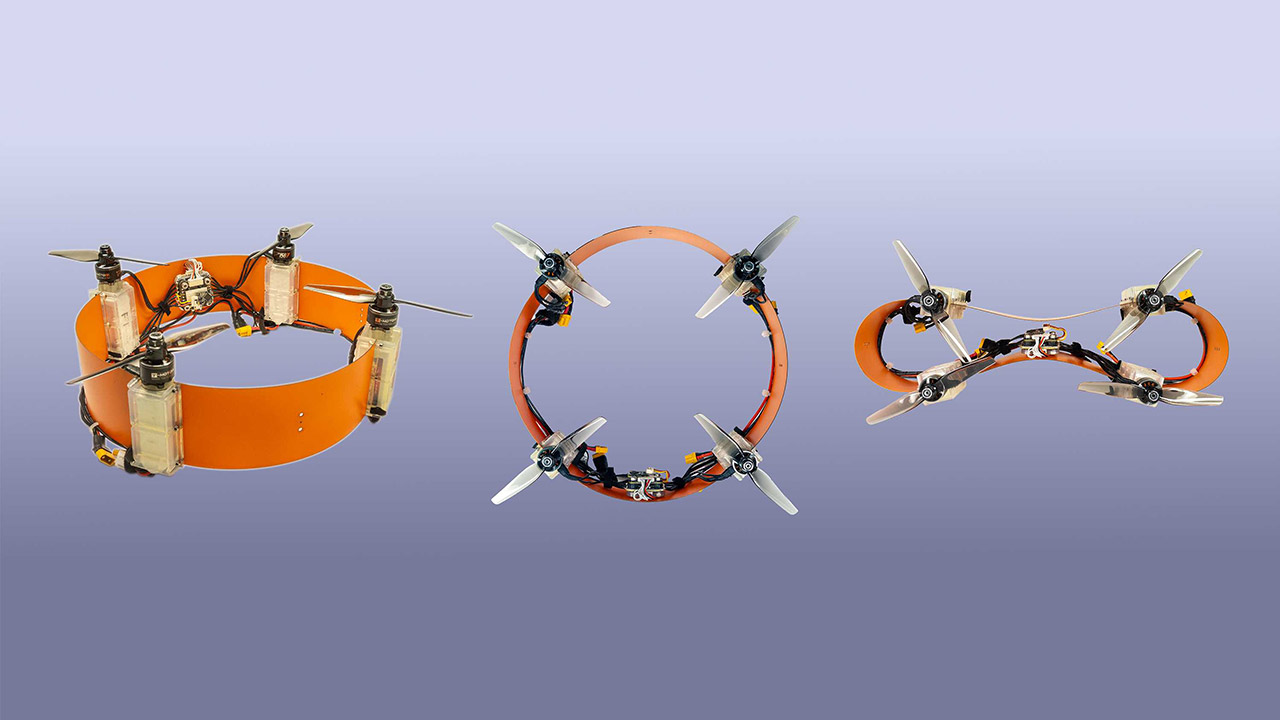
In the collision testing field, the drone was essentially crashed into barriers at around 25 kilometers per hour, which was about the maximum speed that could be achieved in the available space. The ring flattens for a second before bouncing back. Onboard sensors and an AI-controlled system detect the disturbance and stabilize the vehicle, passing control back over to the navigation system so that flight can continue uninterrupted. They’ve also discovered that the drone’s open central area may be used to grasp a soft first aid kit, carry it around, and set it down again, or even pick up something heavier than the drone itself. One proposed solution is to deploy a net across the central gap to catch additional aircraft.
The actual materials for the drone’s airframe cost less than fifteen Swiss francs. They also have quick release fasteners and slide-in batteries, making it simple to unzip and fold the ring into a package that will only fit inside a medium-sized bag, which is quite useful for when crews need to go out into the middle of nowhere. According to the calculations included in the preprint, the frame may compress down to only 70% of its regular size while remaining three orders of magnitude more compliant than a standard aircraft.
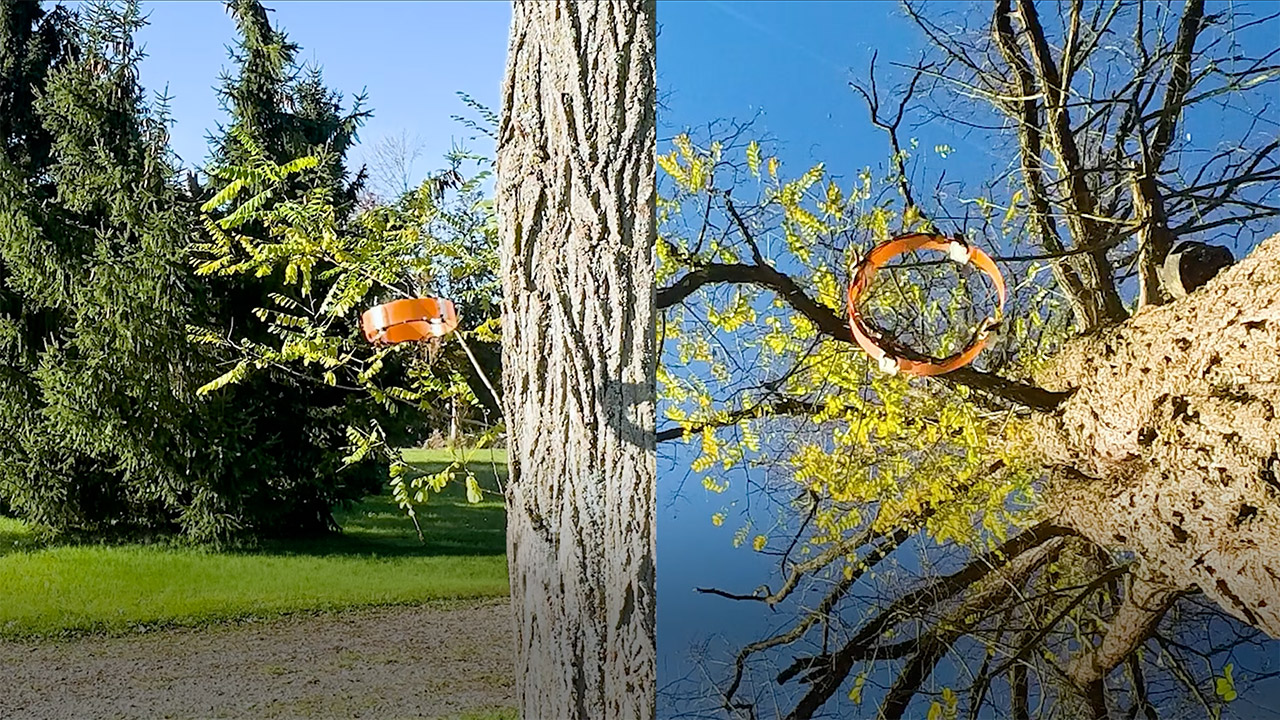
That combination of flexibility and stiffness opens up inspection work that includes crawling around inside ship ballast tanks, going through wreckage in a collapsed building, and conducting environmental surveys in dense forests, where stiff machines are almost guarantyd to be knocked out on contact. There is still a lot of work to be done on perception and vibration handling before this thing can leave the lab, but the prototype they have so far demonstrates that it is possible to build a drone that is deliberately soft while still handling speeds and agility without hitting the deck.
FlexiQuad Drone From ETH Zurich Survives Collisions and Still Flies at High Speed
#FlexiQuad #Drone #ETH #Zurich #Survives #Collisions #Flies #High #Speed
