
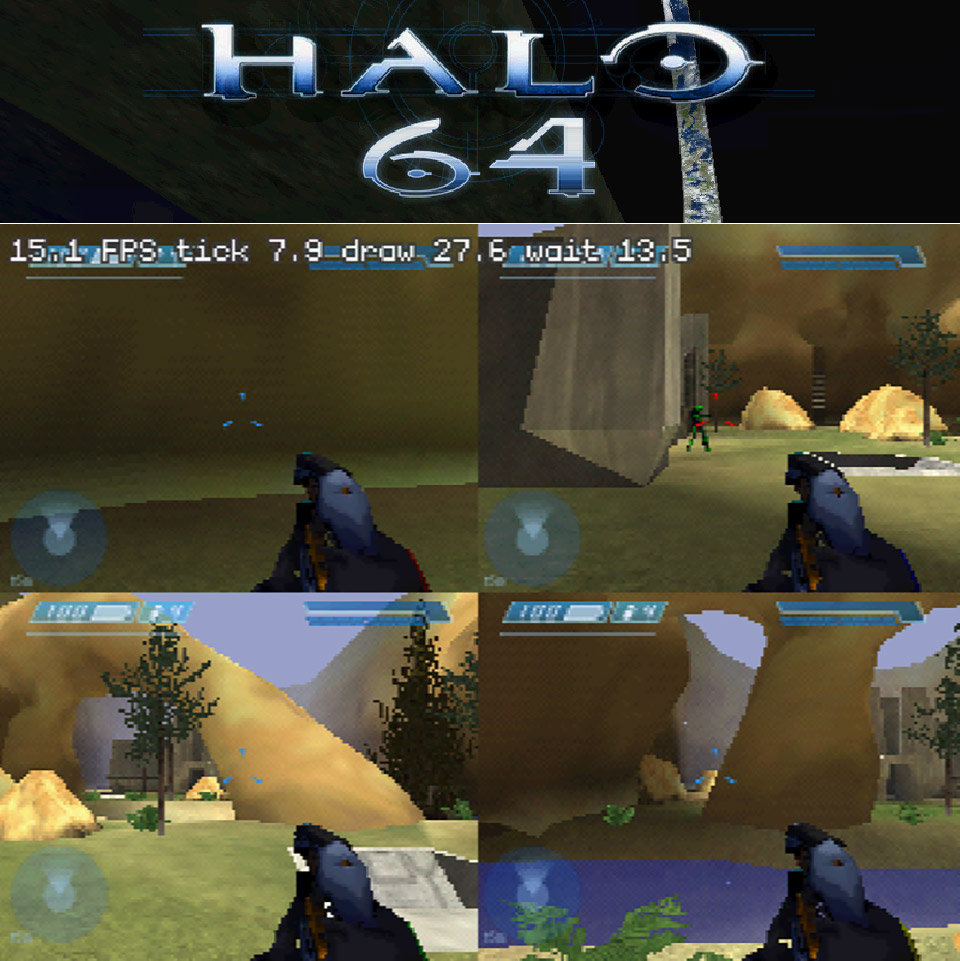
Twenty five years after Halo Combat Evolved redefined console shooters on the original Xbox, a fan project has moved its multiplayer suite onto the Nintendo 64. Halo 64, created by Jack Tulli and available on GitHub, runs the original game’s objects, physics, collision detection, weapons, game types, HUD and pathfinding on the N64’s VR4300 processor. Maps come from a player’s own Xbox disc image. A new renderer, menu system, HUD drawing and sound layer sit on top of libdragon and tiny3d.
The end result is a local multiplayer extravaganza in which you can compete with pals in split screen mode, one to four players at a time. You’ll be able to play on all thirteen of the original multiplayer maps, including Prisoner, Hang ’em High, Chill Out, Derelict, Boarding Action, Blood Gulch, Wizard, Chiron TL-34, Longest, and the thrilling Damnation and frenetic Rat Race. Don’t worry about the game modes; vehicles, guns, teleporters, and water features all accompany the journey. You can play Slayer, Team Slayer, Slayer Pro, Capture the Flag, King of the Hill, Oddball, and even Race, with each accessible in free-for-all or team modes.
A bunch of bots will fill the empty spaces, and up to fifteen AI opponents can join in on the fun, as long as Halo does not reach its sixteen-player limit. You can select the difficulty level, ranging from lovely and easy to super-hard legendary. Get this: the bots employ the same pathfinding as the original game. They focus on the more powerful weapons and fight in groups. Each match, they select a random character name from a list of roughly three hundred very unusual names selected from Mario, Zelda, GoldenEye, and Rare’s N64 libraries. After eight bots, it becomes a little unwieldy, and the menu cautions you that your console may suffer slightly.
The Firefight mode now allows you and a few friends (up to four players) to take on waves of Grunts, Jackals, and Elites on multiplayer maps while sharing lives and selecting from four distinct difficulty settings. A pause menu allows you to stop the action, view the scoreboard for everyone (including the AI), and even access the original Halo HUD, which includes shields, health, ammunition, a motion sensor, messages, and scores. The traditional sounds from the original game have returned, including weapon and vehicle noises. Yeah, the main menu looks a little rough with its interlaced 640×480 image on that familiar ring-in-space backdrop, but it now proudly displays a Halo 64 logo.
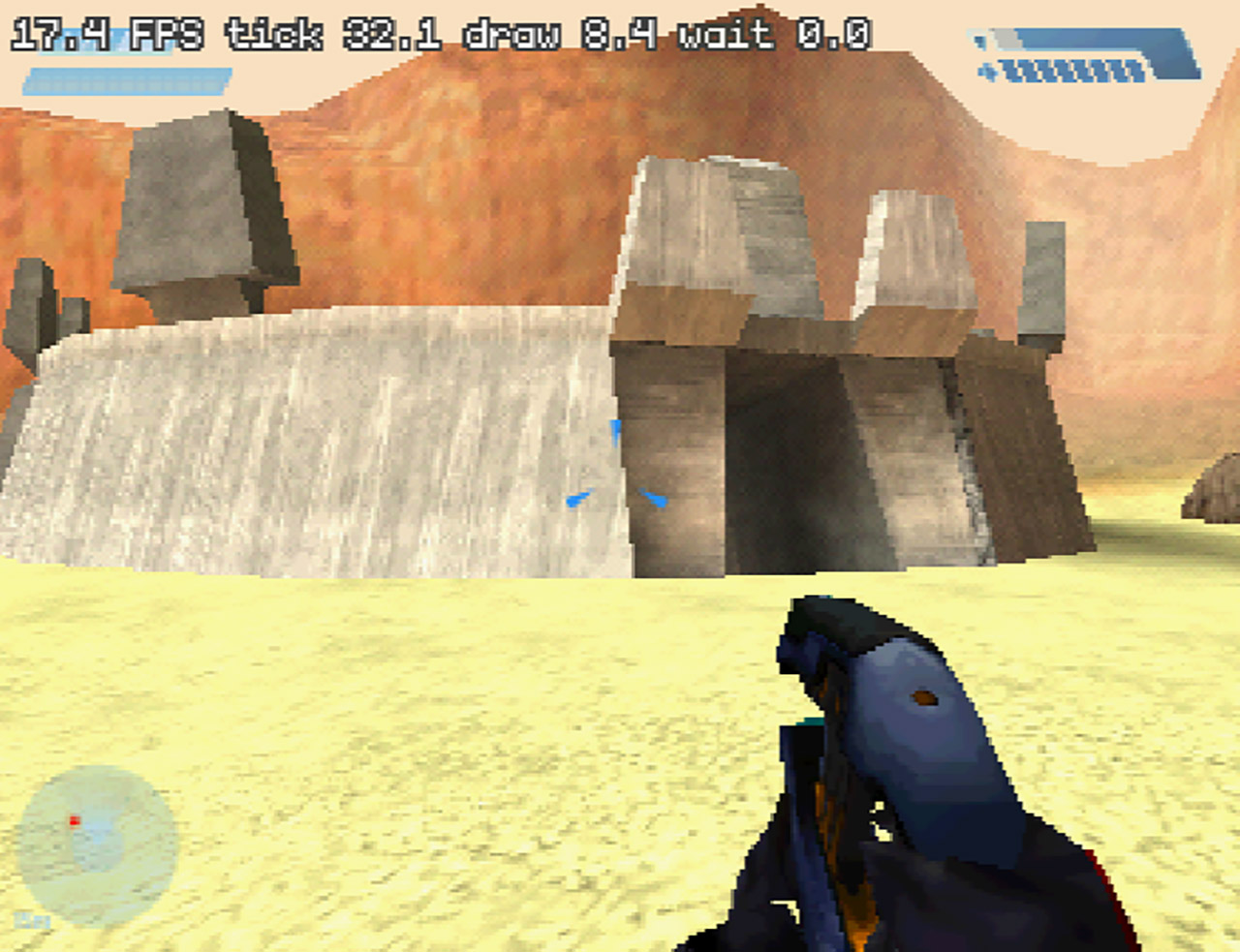
When it comes to controller layouts, you’re in luck, as there are six to pick from, including regular, GoldenEye, D-pad movement, and even bumper jumper. Want to crouch? You can either turn it on or keep it held down. Other customization options include changing the look inversion, swapping the fire and grenade buttons, and even enabling independent look speeds for the analog stick and C buttons. Oh, there’s also rumble feedback. You may enable it for shots, hits, explosions, and vehicles, with a toggle to turn it off or on for each player. Picture quality and performance settings are saved directly to the cartridge’s EEPROM.
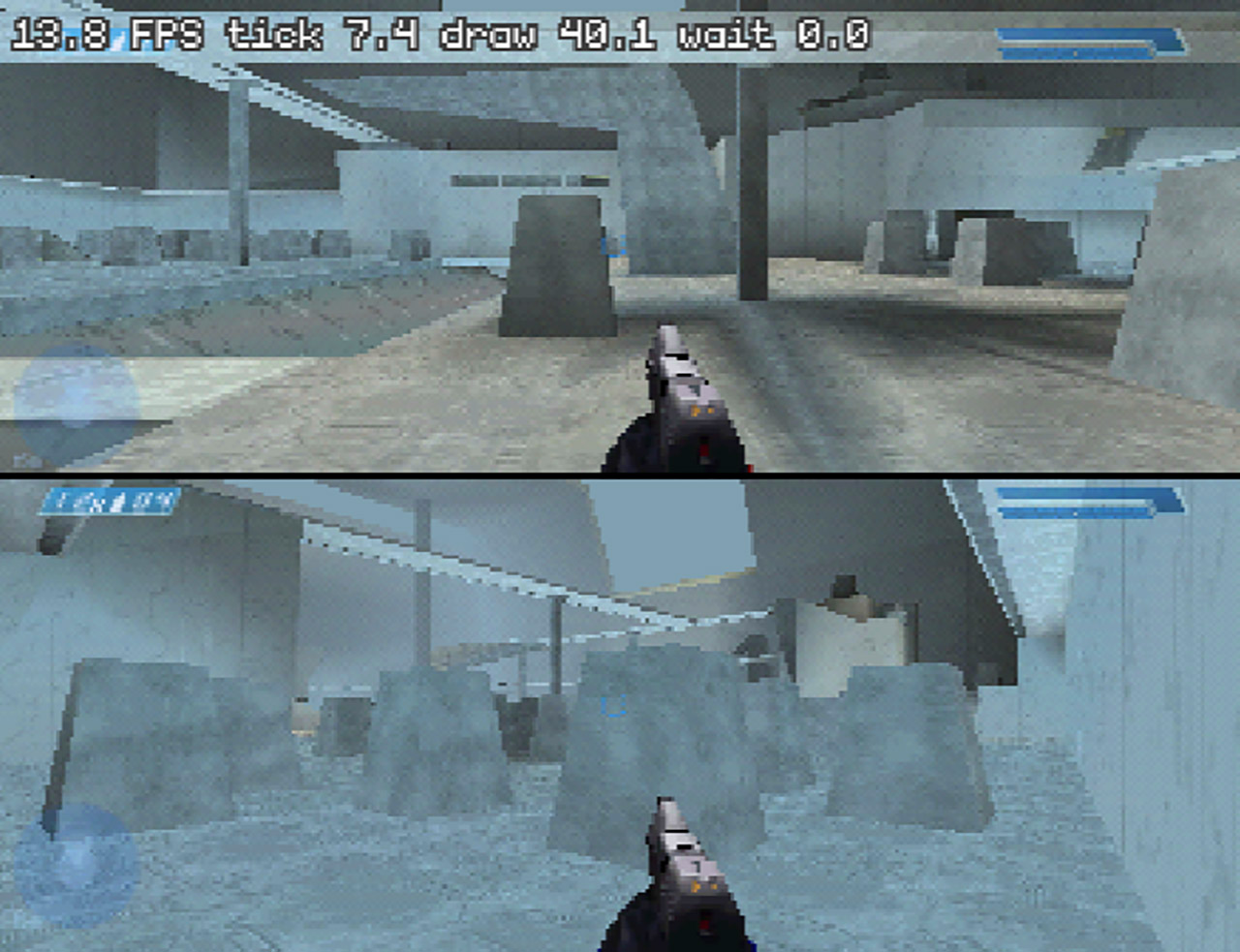
The game’s graphics use a color map method to load neighboring tiles from the cartridge, giving the ground textures far more clarity than a simple low-poly approach. Plus, Blood Gulch retains its beautiful blue sky. If you’re concerned about performance, don’t be, because the game allows you to trade off graphic detail for frame rate when more players or bots join in the fun.
Halo 64 Port Turns Blood Gulch Into A Nintendo 64 Split Screen Match
#Halo #Port #Turns #Blood #Gulch #Nintendo #Split #Screen #Match
